One-Wall Kitchen Layouts: The Essential Do's and Don'ts
In today's design-savvy world, the one-wall kitchen layout is rapidly gaining traction as a go-to choice for small homes and apartments. With its streamlined design that tucks everything neatly along a single wall, this layout offers a perfect blend of form and function.


A one-wall kitchen puts everything along a single wall. Cabinets, appliances, and work surfaces sit in one straight line, making this layout a popular choice for small homes, apartments, and studios.
It looks simple, but it is not effortless. With limited space, every decision matters. Get it right, and the kitchen feels efficient and open. Get it wrong, and it quickly feels cramped.
This guide walks through the most important do’s and don’ts to help you design a one-wall kitchen that works well and looks good.
Why One-Wall Kitchens Work So Well in Small Spaces
Before getting into the do's and don'ts, it helps to understand why this layout is so popular.
One-wall kitchens are a good fit if you want:
- A compact layout that uses minimal floor space
- Clear sightlines and a less cluttered look
- A kitchen that blends into an open living area
Because everything is in one place, the design needs to be intentional. That is where the do’s and don’ts come in.
The Do’s of One-Wall Kitchen Design
1. Use the full height of the wall
When counter space is limited, vertical space becomes your best storage option.
Wall-mounted storage like spice racks, magnetic knife strips, and pegboards keeps everyday items within reach without crowding the counter. Floating shelves add visual interest and make the kitchen feel lighter, especially when mixed with closed cabinets.
Tall cabinets are ideal for appliances and items you do not use daily. They keep clutter out of sight and help the wall feel cohesive instead of broken up.

💡RoomSketcher Tip
Mixing open shelving with tall cabinets often feels more balanced than using only one or the other.
2. Choose appliances that fit the scale
In a one-wall kitchen, bulky appliances stand out quickly.
Compact options like slim dishwashers, under-counter refrigerators, and combination ovens free up space without limiting function. Many of these appliances are also more energy-efficient, which is a bonus in smaller homes.
The goal is not to downsize for the sake of it. It is to choose appliances that match the proportions of the space.
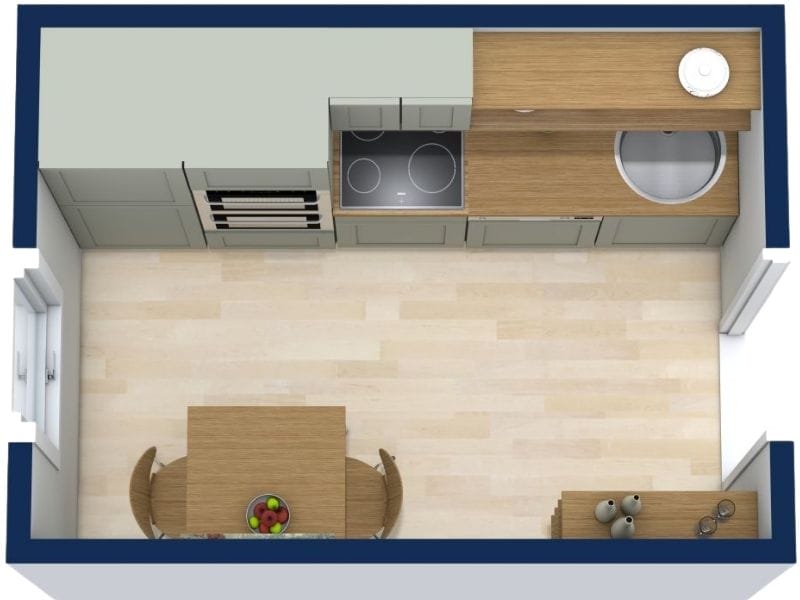
3. Stick to light, reflective colors
Color plays a big role in how spacious a one-wall kitchen feels.
Light colors such as white, beige, soft gray, or muted pastels reflect more light and make the wall feel longer and more open. They also help cabinets and appliances blend together visually.
Darker colors can work, but they are best used as accents rather than across the entire wall.
If the kitchen feels narrow, light colors will always help.

4. Use furniture that does more than one job
When floor space is limited, every piece needs a purpose.
A rolling island can add prep space, storage, and casual seating, then move out of the way when not needed. Fold-down tables and benches with built-in storage are also smart solutions.
Multi-functional furniture gives you flexibility without making the kitchen feel crowded.

5. Plan the workflow, not just the look
The classic kitchen work triangle does not apply here, but workflow still matters.
In a one-wall kitchen, think in terms of a straight work line. Place zones in a logical order, such as:
- Sink and prep area
- Cooktop or oven
- Refrigerator
This reduces unnecessary movement and makes cooking feel smoother, even in a small space.

The Don’ts of One-Wall Kitchen Design
1. Do not try to fit everything
It is tempting to use every available inch, but overcrowding is the fastest way to make a small kitchen uncomfortable.
Too many appliances, cabinets, or decorative items can make the space feel chaotic. Focus on what you actually use and store the rest out of sight.
A little empty space is not wasted space. It helps the kitchen breathe.
2. Do not overlook lighting
Lighting is often underestimated in small kitchens.
Relying on a single ceiling light is rarely enough. Under-cabinet lighting improves visibility for food prep, while ceiling or pendant lights provide general illumination.
Accent lighting inside cabinets or along the floor can also add depth and make the kitchen feel more inviting.

3. Do not ignore how it looks
Function comes first, but aesthetics still matter.
A long row of identical cabinets can feel flat and heavy. Breaking it up with open shelving, a textured backsplash, or a change in cabinet finish helps create visual rhythm.
Plants, artwork, or a few well-chosen accessories can also soften the space without adding clutter.
4. Do not cut corners on materials
Small kitchens put everything on display.
Low-quality cabinets, countertops, or finishes will show wear faster and are more noticeable in a compact layout. Investing in durable materials pays off over time and improves the overall feel of the kitchen.
In a one-wall kitchen, quality matters more than quantity.
5. Do not skip the planning stage
A one-wall kitchen may look simple, but it requires careful planning.
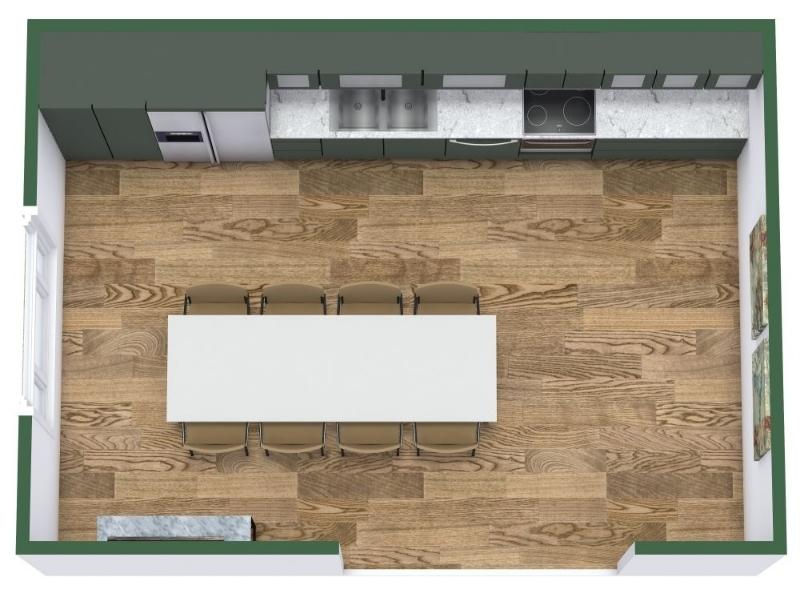
Because all elements sit on one wall, mistakes are harder to fix later. Planning tools help you test layouts, adjust spacing, and see how everything works together before anything is built.
Using the RoomSketcher app, you can draw your one-wall kitchen, try different layouts, and view the result in Live 3D. This makes it easier to spot issues early and feel confident in your design decisions.

Plan Your One-Wall Kitchen with Confidence
A one-wall kitchen can be practical, stylish, and surprisingly flexible. The key is making intentional choices and avoiding common mistakes.
If you want to visualize your layout before committing, the RoomSketcher app lets you plan, adjust, and explore your kitchen design in 2D and Live 3D. It is a simple way to make sure your one-wall kitchen works for your space and your daily routine.
Plan your kitchen and see how it comes together before you build.
Recommended Reads

Kitchen Layouts 101 - The Complete Guide
In the heart of every home, the kitchen stands as a hub of creativity, nourishment, and connection. A well-designed kitchen layout is more than just a configuration of cabinets and appliances; it's a blueprint for a seamless culinary experience.

6 Tips For Designing an L-Shaped Kitchen Layout
We have put together 6 tips to help you create the perfect L-shaped kitchen layout.

Make a Small Kitchen Layout Feel Bigger With Clever Design Tricks
Create kitchen floor plans in minutes with the easy-to-use RoomSketcher app and discover how to make a small kitchen layout feel bigger