8 Design Tips for Small Living Rooms
Make the most of a small or narrow living room with smarter furniture placement, clear pathways, and a layout that works for everyday life.

Quick summary:
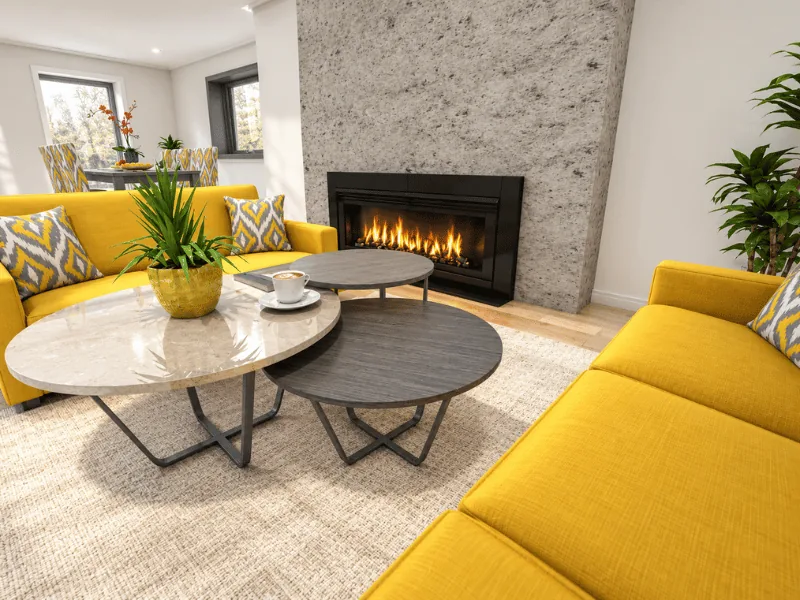
A small living room fails in one of two directions: it feels overcrowded, or it reads as an empty alleyway. Both are layout problems rather than size problems. Placing furniture perpendicular to a long wall, giving the room a clear focal point, keeping one unobstructed pathway, and breaking up rectangular lines with angles and curves solve most of it — and drawing a floor plan first lets you test the arrangement before moving anything heavy.
Creating a small living room layout that works can be a challenging task, especially if the living room in your humble abode is small or narrow. If not laid out properly, you can end up with a living space that feels overcrowded or like an empty ‘alleyway’. We know this isn’t your vision for your home. So, we are here to help with some expert tips on how to layout a small living room.
In this article:
1. Make a 90 Degree Turn
Conquer a long, narrow living room by placing furniture at a 90 degree angle and perpendicular to the length of a room. It creates a boundary that gives the room definition and helps to prevent it from feeling tunnel-like. Pieces like a love seat or a medium-sized Barcelona chair can do the trick.
2. Create a Focal Point
Give your small room a focal point by creating an accent wall. You can use an artistic wall paper, a favorite paint color or creative layout of art work.
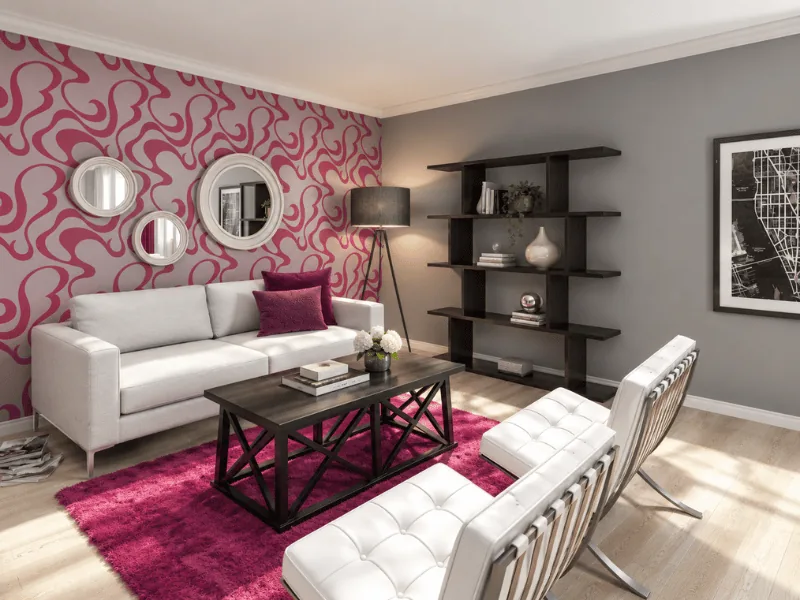
In this room, we used wallpaper and grouping of mirrors to create a focal point. You can also adorn your wall with framed photographs or paintings. Artistic shelving and storage units can create an effective focal point, while also providing valuable extra storage space.
3. Plan Your Pathway
Make your pathways a priority when planning the layout of your space. This is especially important for homes with an open floor plan. The easiest way is to create a straight pathway on one side of the room. In this narrow living room, you have two options. You can either place the walkway in front of the sofa or behind it.
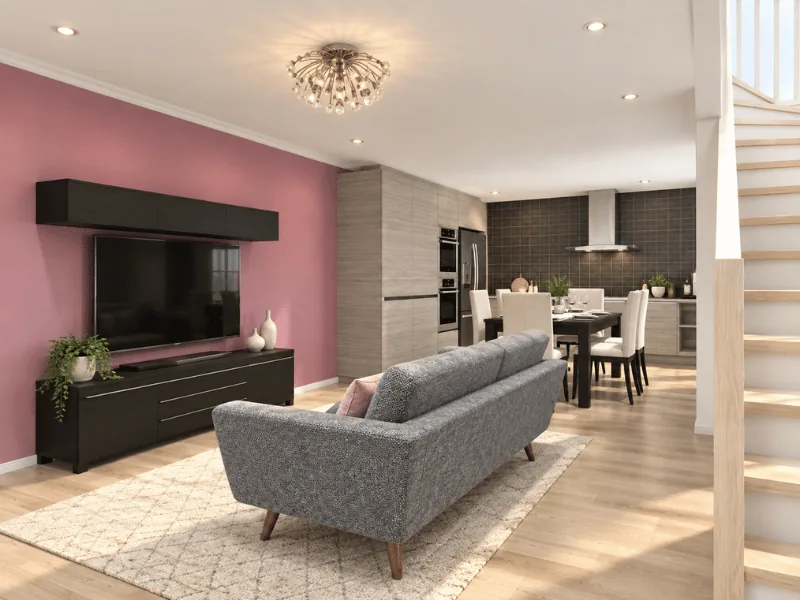
Locating the pathway behind the sofa takes up a little more of the room. However, it clearly defines where you should walk and it makes the living room seating area more intimate.
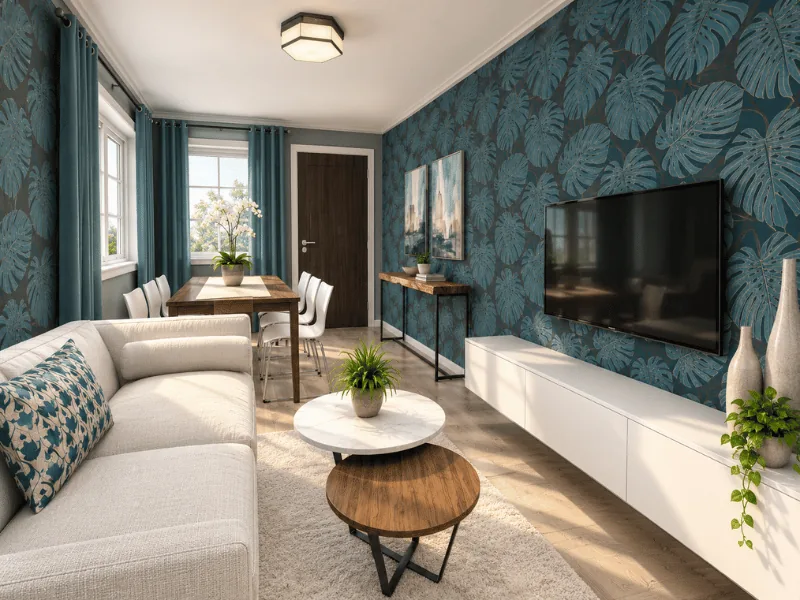
Locating the pathway in front of the sofa allows the living room layout to feel bigger. However, having circulation through the space and in front of the television may be disruptive. To determine the right solution, think about how much traffic comes through the room and how you intend to use the room.
Whichever layout you choose, make sure your pathway is clear and unobstructed. Avoid common pitfalls, such as a rug that lays halfway across the path which can trip you up.
4. Create a Cozy Corner
The layout for this small living room focuses on a corner of the room. Place your seating towards a corner and close together to create a cozy and intimate seating arrangement. Turn your side chairs at a slight angle to face towards the sofa. This creates a curved pathway through the room that is inviting and that does not interfere with the function of the room.
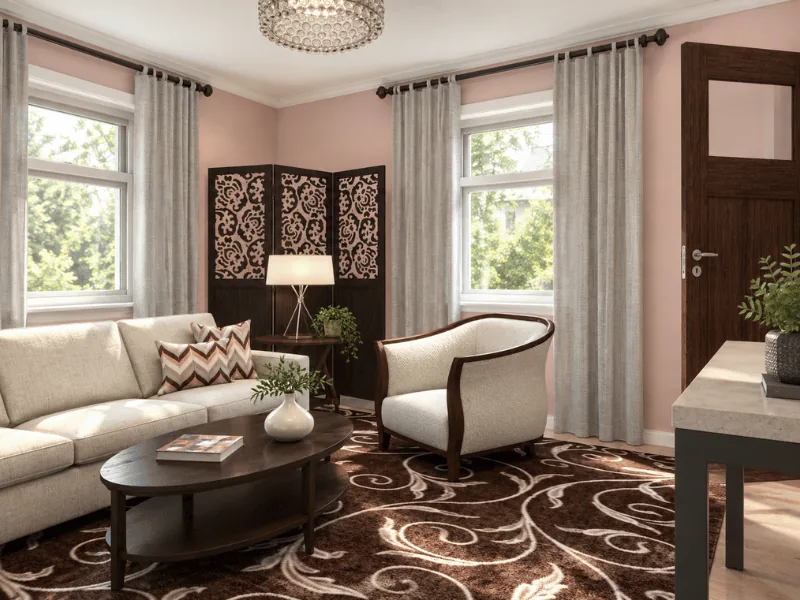
Extend the area rug so that you can walk across it easily. Place a decorative screen, an end table with a lamp or a large plant in the corner to “soften” it.
Recommended reading: Rug Placement 101.
5. Try a New Angle
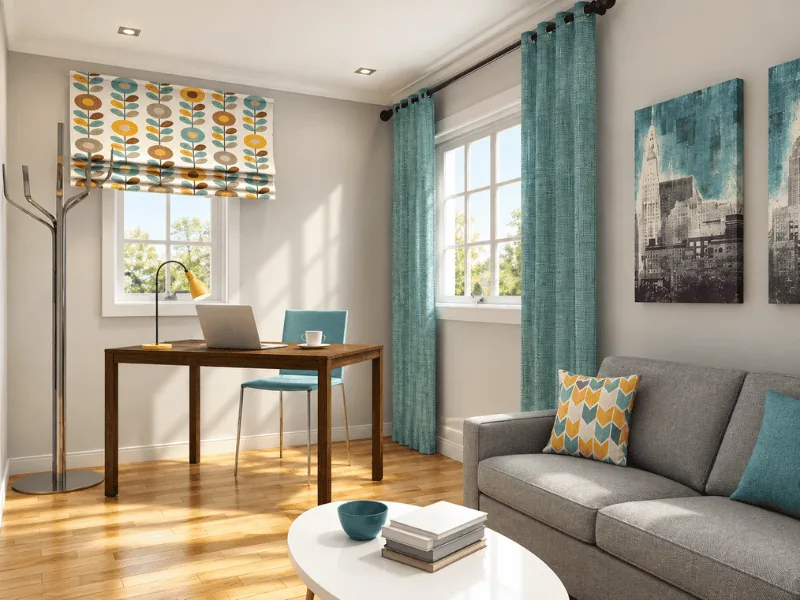
Believe it or not, placing a piece of furniture at an angle can make a small living room appear wider. Introducing an angle can be the perfect way to break up a space. Do this with lighter looking furniture such as a desk or accent chair. This will keep the room feeling open and spacious.
6. Consider Your Coffee Table
While a coffee table may seem like a standard or conventional piece for a room, it doesn’t have to be. Get creative when considering your coffee table. Can you get some additional storage space by having a shelf underneath? Explore with unconventional pieces, such as an old trunk that can offer extra storage space inside or an ottoman (or two) with hidden storage.
7. Add Some Curves
A common mistake when laying out small rectangular spaces is to line it with rectangular furniture. Too many rectangular shapes can ruin your living room layout. Curves are sexy and pleasing to the eye. They are also an excellent way to add interest and flow to a small room.
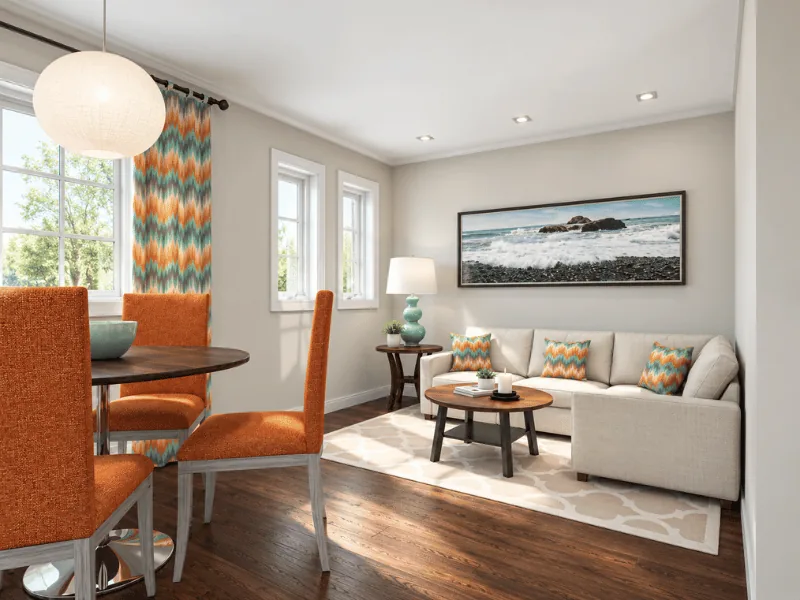
Look for circular coffee tables and dining tables to add some curved lines to the room. Round lighting fixtures can also help do the trick.
8. Create a Floor Plan
When laying out a small room, always determine the location of the largest piece of furniture first. For example, in this room the longer sofa fits best along the longest wall.
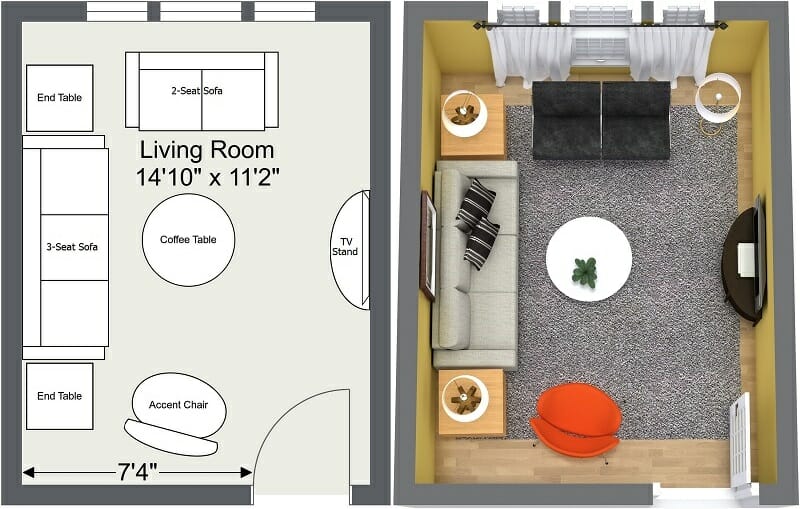
To figure out the best way to layout your room, take a tip from the pros and create a floor plan. It will help you to see your room layout and what will fit before you start shopping or moving furniture. This will save you time, money and effort.
You can create a floor plan quickly and easily with the RoomSketcher App, an easy-to-use floor plan and home design tool.
Plan Your Home with RoomSketcher
Before moving furniture, try your layout in RoomSketcher. Draw your living room to scale, add your sofa, chairs, tables, and other furniture, and test different arrangements to see what fits best.
You can then view your floor plan in 3D to get a better feel for the space before making changes in the real room.
How do I lay out a long, narrow living room?
What should I position first in a small living room?
Should the walkway go in front of or behind the sofa?
How do I create a focal point in a small living room?
Does placing furniture at an angle really help?
What kind of coffee table suits a small living room?
Why add curves to a small rectangular room?
Recommended reads

12 Micro Home Floor Plans for Space Efficiency
Discover how innovative design can transform small spaces into functional and stylish homes!

12 Timeless Shotgun House Floor Plans
Shotgun houses have gained popularity for their efficient use of space and timeless appeal. Explore our 12 unique floor plans that blend history with modern living.
Small Bathroom Layout: 10 Ideas That Work
Short on space? RoomSketcher shows you 10 Small Bathroom Ideas that really work and how to try them in your own Bathroom Design.