5 Ways to Make the Most of a U-shaped Kitchen
A U-shaped kitchen gives you lots of counter space, smart storage, and a layout that’s easy to work in. With the right design choices, this classic shape can fit almost any kitchen size and style.


A U-shaped kitchen layout is popular for good reason. With counters and cabinets along three sides, it gives you lots of workspace and storage while keeping everything within easy reach. This layout works in small, medium, and large kitchens, and it adapts well to both open and closed floor plans.
What Is a U-Shaped Kitchen Layout?
A U-shaped kitchen has three connected sides that create a natural workspace with two corners. In some places, this layout is also called a C-shaped kitchen. If your room already has three walls, the layout fits in easily. If not, you can still build a U-shaped kitchen by using a peninsula as the third side. This works especially well in open-plan homes where a peninsula can double as a breakfast bar or seating area.
U-shaped kitchens are also ideal for the classic kitchen work triangle. You can place the stove on one side, the sink on another, and the refrigerator on the third to create a smooth flow during cooking.
Below, you’ll find practical tips for designing a U-shaped kitchen you’ll love living and cooking in.
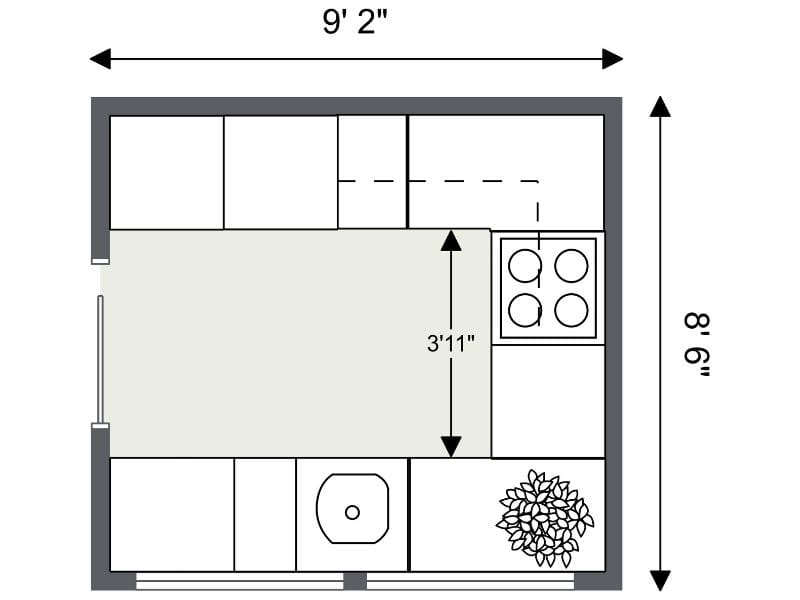
1. Know the Pros and Cons of a U-Shaped Kitchen
Why U-shaped kitchens work well
A U-shaped layout gives you plenty of counter space for prep, small appliances, and serving areas. You also get lots of cabinet storage above and below your counters. This helps create a clean, clutter-free look because most things can be tucked away out of sight.
You also have great placement options for large appliances. A U shape gives you natural spots for the sink, refrigerator, and range while supporting the work triangle. In many homes, this layout is comfortable for two or more people cooking at the same time.
If your kitchen is large enough, you may also be able to add an island. This creates even more workspace and storage.
💡RoomSketcher Tip
Try to keep 3 to 4 feet of space between a counter and an island so the room still feels open and easy to move around in.
Potential drawbacks
A U-shaped kitchen may feel tight if the room is very narrow. Since there is only one main entry point, this layout can sometimes create congestion if your kitchen is a popular gathering spot. Cabinet-heavy layouts can also increase the total project cost, so keep your budget in mind.
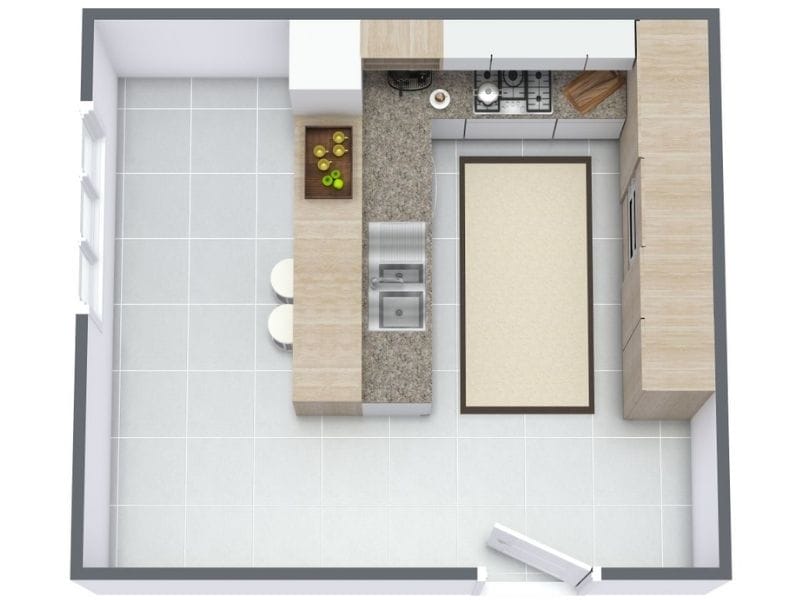
2. Work the Kitchen Triangle Into Your Design
The work triangle is the distance between the stove, sink, and refrigerator. Most designers aim to place these areas 4 to 8 feet apart from each other. A U shape makes this easier because each appliance can sit on its own side of the layout.
A common setup is:
- Stove and oven on one wall
- Sink on the opposite or adjacent wall
- Refrigerator on the third side or at the end of the U to keep counter space continuous
The goal is simple. You should be able to move between tasks without taking too many steps.

3. Design Your Kitchen to Fit Your Space
U-shaped kitchens come in many shapes and sizes. Here are a few helpful guidelines.
Small or narrow kitchens
You can absolutely use a U shape in a small kitchen. Try to keep at least 3.5 feet of space between the opposite sides of the U.
If the walkway is too narrow, the layout may feel enclosed. A total width of about 7.5 feet or more helps the layout feel comfortable.
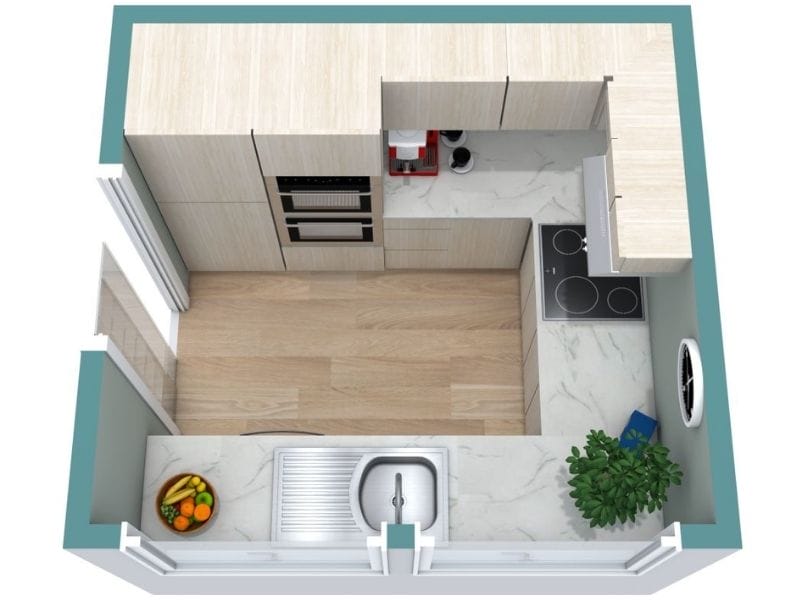
Medium or square kitchens
This is the ideal scenario for a U-shaped layout. All three sides have enough breathing room, and walking distances stay short. Many medium kitchens naturally form a square, which makes placement simple and visually balanced.
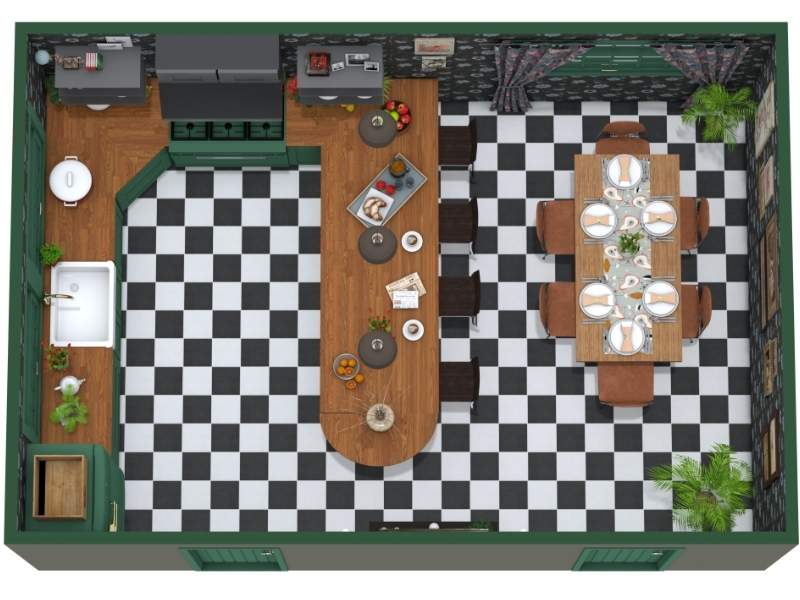
Large kitchens
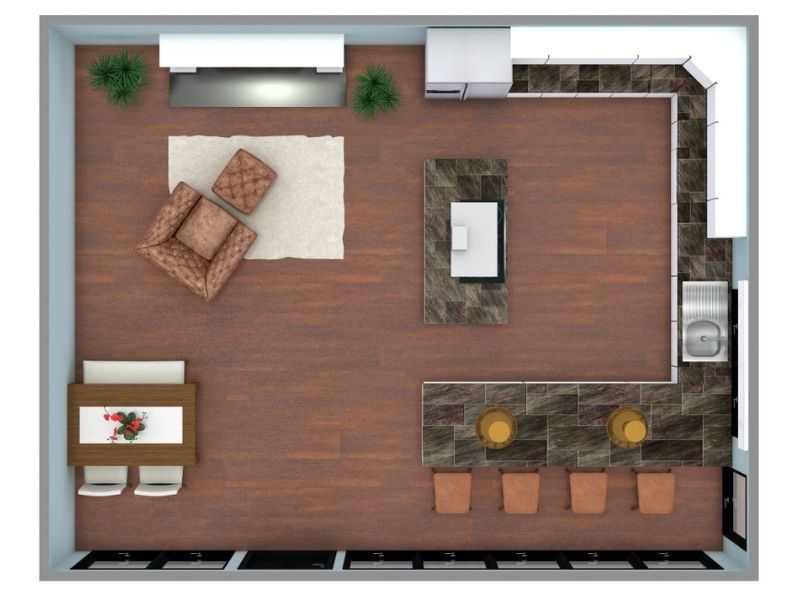
If the room is spacious, your appliances may feel spread out. Adding an island can solve this. You can place a cooktop or sink in the island, create extra storage, or add seating for family and guests.
4. Streamline Your Storage and Keep the Room Feeling Light
A U shape gives you a generous amount of storage. The challenge is avoiding a heavy wall of cabinets.
Here are a few ideas:
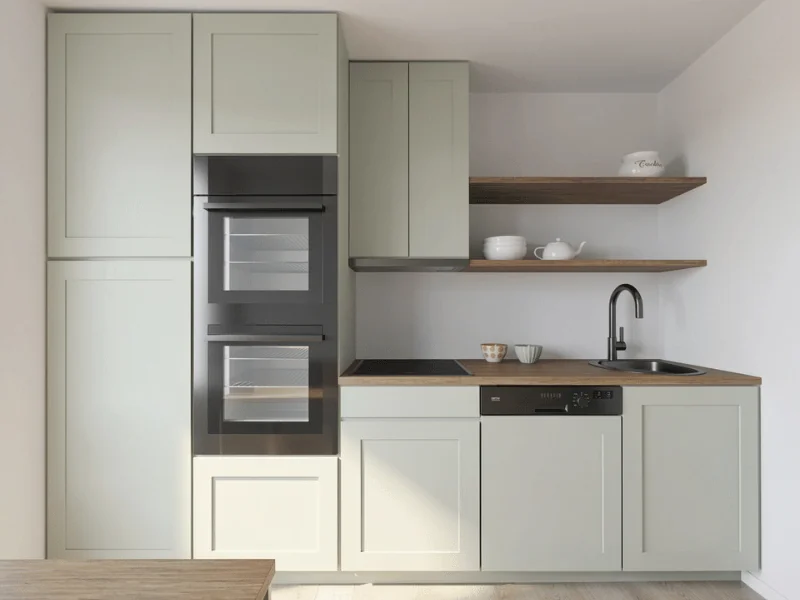
- Mix open shelves or glass-front cabinets with closed cabinets to lighten the look.
- Add floor-to-ceiling cabinets on one wall to create a clean, modern feel.
- Keep some open or negative space around windows and range hoods so the room feels airy.
- Use corner solutions like lazy susans or pull-out shelves so you don’t lose valuable storage in the corners.

5. Choose Finishes and Decor That Bring Balance
Your color palette and materials play a big role in how a U-shaped kitchen feels.
- Try using one color for upper cabinets and another for lower cabinets to break up long rows.
- Add texture through a patterned backsplash or a detailed range hood.
- Use lighting to create warmth and interest. Pendant lights often work well in larger kitchens.
These touches keep the space from feeling boxed in and help highlight focal points.

6. Consider Turning Your U-Shaped Kitchen Into a G-Shaped Kitchen
If you add a peninsula to your U-shaped layout, you create what is known as a G-shaped kitchen. This adds more counter space, more storage, and a natural spot for seating. It also creates a friendly transition to nearby living or dining areas.
A G shape works very well in medium and large kitchens. Just make sure you leave enough open space for comfortable movement.

Start Planning Your U-Shaped Kitchen
Now that you have the basics, you can explore different options and try out ideas that fit your space. The RoomSketcher app lets you draw your layout, test appliance placements, and see your kitchen in impressive 3D.
Recommended Reads

6 Tips For Designing an L-Shaped Kitchen Layout
We have put together 6 tips to help you create the perfect L-shaped kitchen layout.
How to Design a Kitchen Layout
Do you feel like designing a kitchen layout is overwhelming? It doesn't have to be. We’ve gathered a list of 9 simple steps to design a kitchen.
Plan Your Kitchen Design with RoomSketcher
Turn your kitchen design ideas into reality with these simple expert kitchen design tips from RoomSketcher.