9 Tips for Creating the Perfect Built-in Home Office Desk
In the last couple of years, working habits have changed dramatically. More people than ever before are saying goodbye to the daily commute and embracing remote working.

Quick summary:
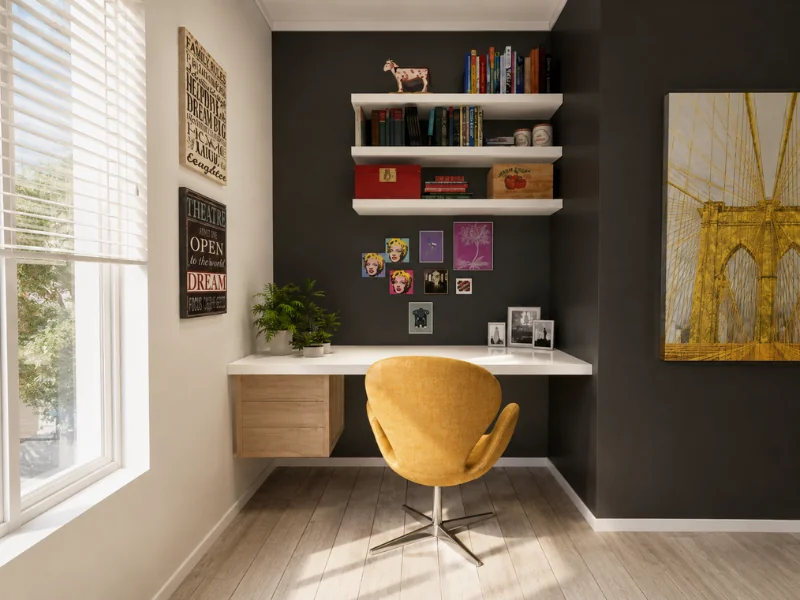
A built-in home office desk turns unused space into a permanent workspace without eating up floor area. The simplest version is essentially a large shelf: mount horizontal wooden supports on each side of a recess and lay a flat surface on top, no legs required. Aim for a desk height around 30 inches (76 cm), add vertical storage above, position it near natural light, and plan the layout on a floor plan before you build.
If you’re leaving behind the traditional 9 to 5 office to start working from home, you’re going to need a comfortable and quiet work environment. And there’s no better way to achieve this than with a built-in home office desk, especially if you’re working with a tight space and budget.
Large tech companies like Google and Apple have even announced they’re looking at more flexible work models once offices reopen following the global pandemic. Many smaller companies are following suit and offering their employees hybrid work solutions.
We’ve put together these top design tips for creating a built-in home office desk. They’ll help you maximize your productivity and smash your career goals while working from home.
Table of contents:
1. Make Good Use of Space
When picking the perfect spot to install your built-in home office desk, look for unused or under-utilized spaces in your home. Alcoves, recesses, nooks, or tight corners are ideal.
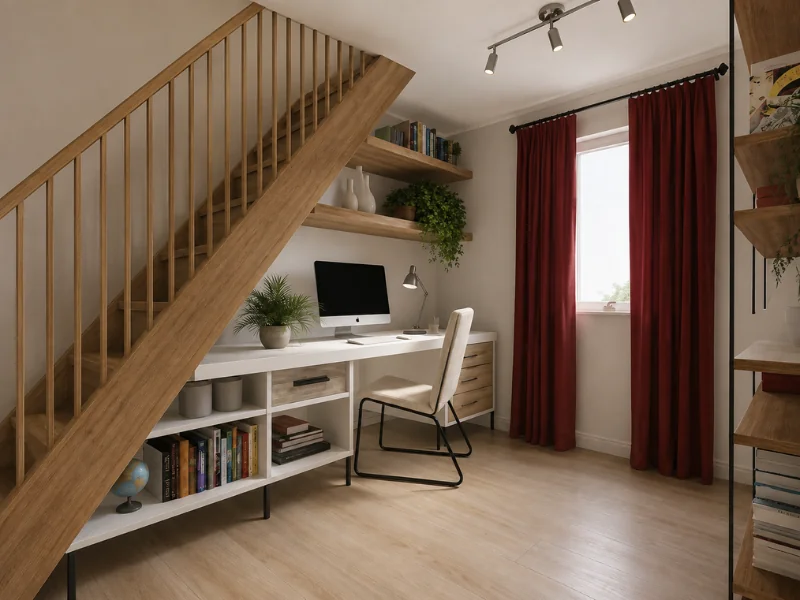
Alternatively, you can position your built-in desk inside a bay window or under a staircase like in this design:
2. Keep It Simple
Installing a built-in office desk in your home can be an inexpensive DIY project—especially if you already have a natural recess in your room.
Simply mount three horizontal wooden lengths on each side of the recessed area, then place a flat table surface on top. You don’t even need table legs as the desk is effectively a large shelf.
3. Add Storage
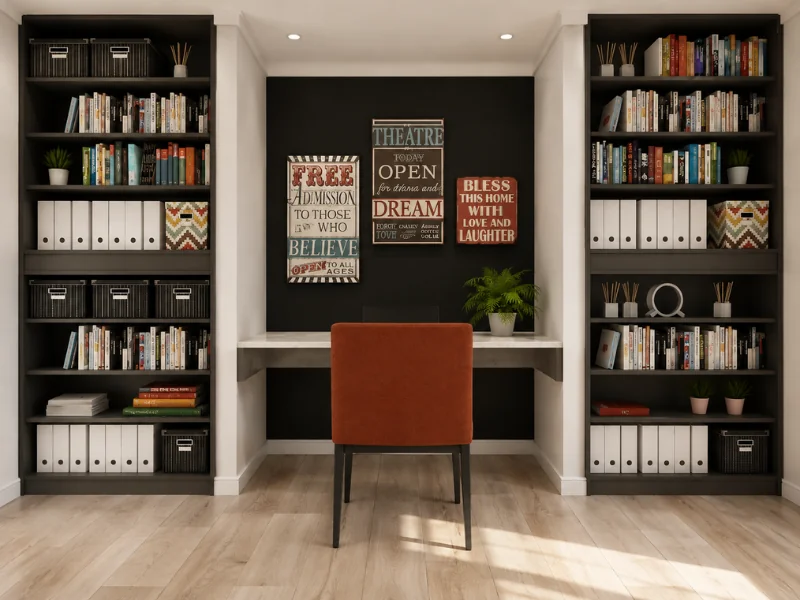
You’re going to need somewhere to keep all your work-related documents, stationery, and equipment. You can install overhead bookshelves and cupboards. If you have enough legroom, drawers can also be fitted under the desk.
The built-in desk in the image above makes good use of the vertical space and includes three long wall-mounted shelves.
4. Maximize Comfort
Working from home means lots of time in your home office. It’s therefore extremely important you feel comfortable. There may even be a legal requirement by your employer to submit a health and safety assessment of your workspace.
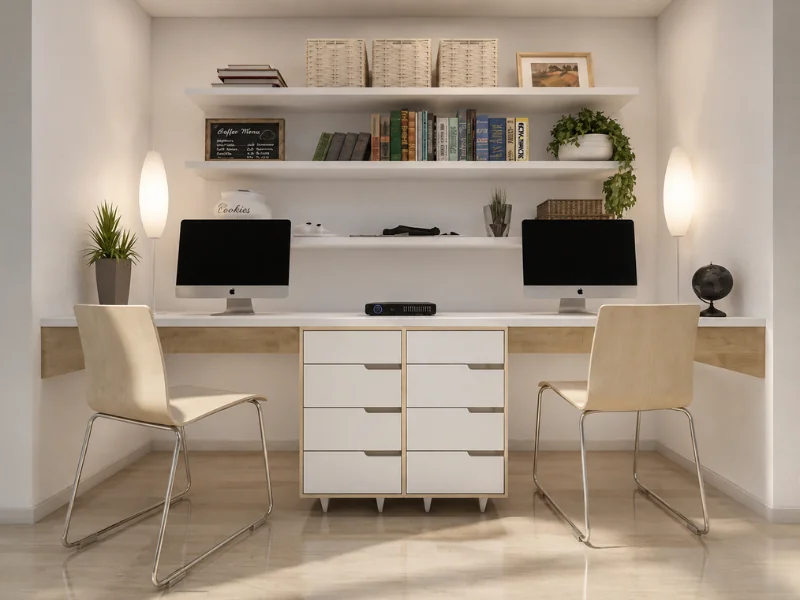
Invest in an ergonomic chair, ensure the desk height is around 30 inches (76 cm), and buy a footrest if needed.
You should also choose a space or room where it’s easy to concentrate – preferably separate from other living areas and away from distractions.
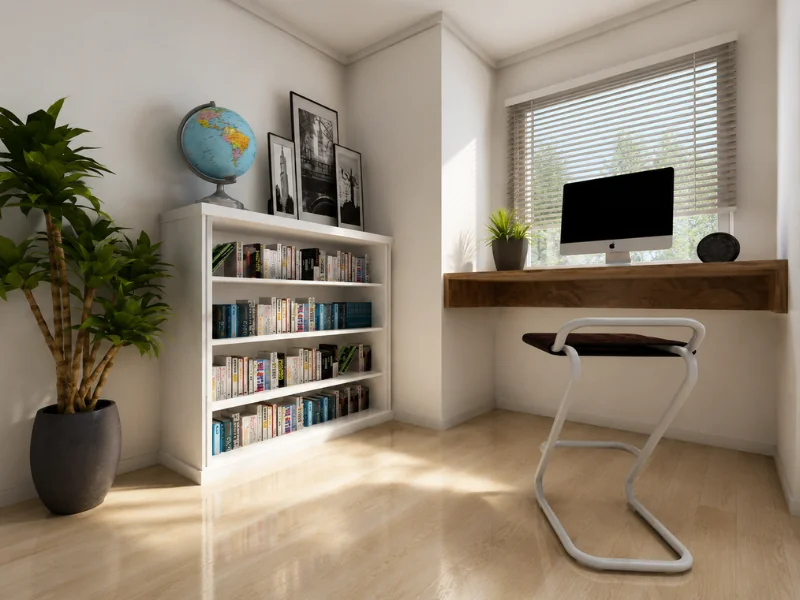
Standing desks have become increasingly popular in recent years. They provide several health benefits including reducing back pain, boosting energy levels, and even helping weight loss.
This built-in home office desk is higher than usual to accommodate a standing posture.
Looking for some home office ideas?
5. Focus on Aesthetics
You should avoid dark dull colors when planning your home office desk. Use complementary shades that don’t clash and decorate the space to match your personality.
Make use of plants for a more relaxed feel and hang artwork to help inspire your creativity.
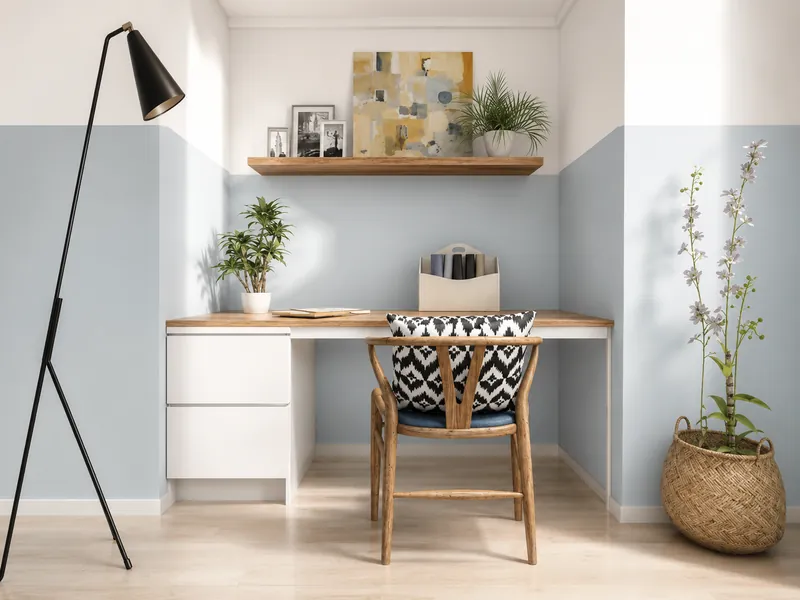
6. Choose an Area With Natural Light
Positioning your built-in home office desk near a window is a smart move. You’ll benefit from plenty of natural light plus having a view to stare at while mulling over an idea.
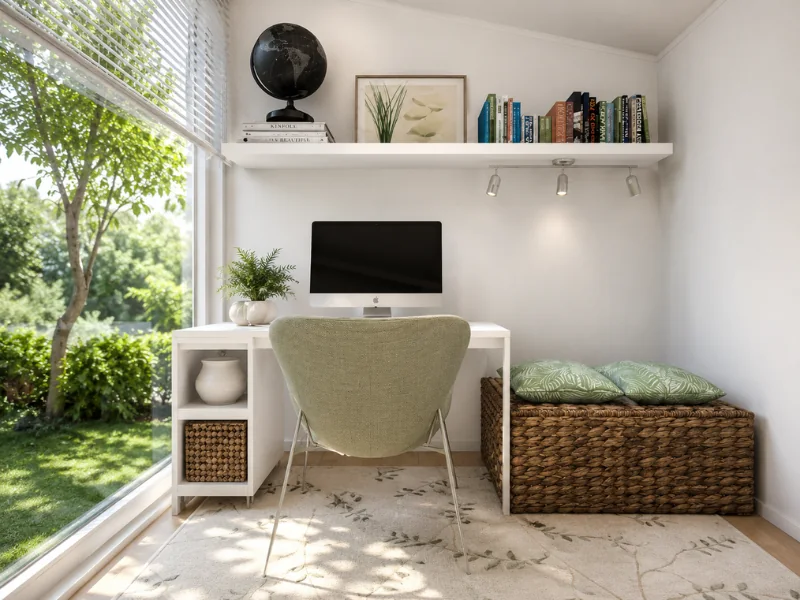
7. Ensure Privacy
When working from home it’s important to segregate work and living areas. The last thing you want is a barking dog or a loud family member interrupting an important business call.
Consider installing soundproof panels on your walls and pick a spot that has a nearby door so you can shut out distractions if necessary.
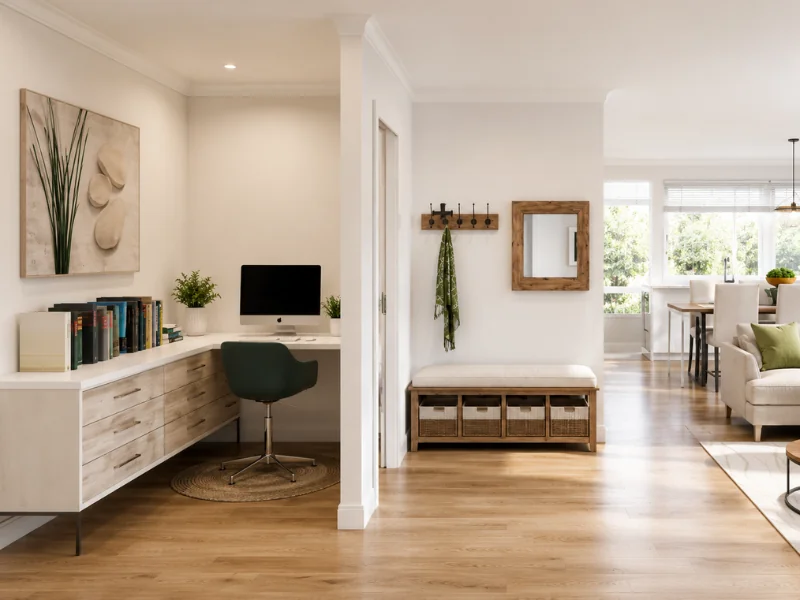
8. Include a Brainstorming Area
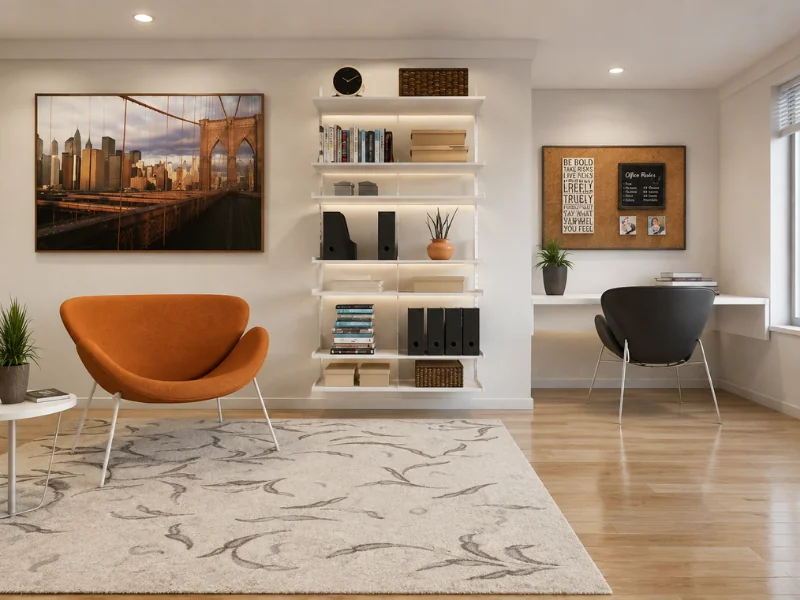
Why not install a pinboard on a nearby wall? You can even place a separate lounging chair and dedicate an area for creative thinking.
This example uses the wall behind the built-in desk to mount a pinboard:
9. Plan Ahead
To quickly assess and compare different options, we recommend you create a detailed floor plan first to find the best placement for your built-in desk. Once you’ve planned out your desk area, it’s easy to tweak the design or change furniture around to see what works best.
We hope you found these tips useful and we wish you the best of luck in creating your built-in office desk!
Common Questions
Look for unused or overlooked space, such as an alcove, recess, nook, or tight corner. A built-in desk can also work well in a bay window or under a staircase.
Yes. A simple built-in desk can be an affordable DIY project. Fix wooden supports to the walls of a recessed area, then place a flat work surface on top. Since the desk works like a large shelf, you may not need legs.
A standard desk is around 30 inches (76 cm) high. Pair it with an ergonomic chair, and add a footrest if needed for extra comfort.
It can be, especially if you prefer to alternate between sitting and standing. A built-in standing desk should be installed higher than a standard seated desk and positioned at a comfortable height for your elbows and wrists.
Separate your workspace from the main living area as much as possible. A location near a door can help reduce distractions, while acoustic panels may help limit noise.
Recommended Reads
9 Essential Home Office Design Tips
Planning a home office? These 9 essential tips will help you create a beautiful and practical home office design.
Design Your Office with RoomSketcher
Plan and visualize your office design online and in 3D! Create layouts, floor plans, 3D images, source furniture and more with RoomSketcher.
8 Inspiring Kitchen Desk Area Ideas
Looking for kitchen desk ideas? Learn how you can create a central command post in your kitchen with these simple kitchen desk design tips.