How to Design a Backyard Garden You’ll Love
Designing a backyard garden starts with a simple plan. When you understand your space and map out the basics, it becomes much easier to create a garden that feels uniquely yours.


Are you thinking about adding a garden to your backyard? Before you start planting, it helps to create a simple garden design.
A good plan gives you clarity on what to grow, where to place it, and how everything will work together. It also sets you up for a smoother, more enjoyable gardening experience.
Designing a garden is a bit like setting up a room. You think about zones, lighting, and how people move through it. The same idea applies outside.
Step 1: Get to Know Your Space
Take a slow walk around your yard. Notice how the light shifts throughout the day and where the shade lingers. Look for areas that stay dry, places that stay damp, and any natural features you want to highlight.
If you want an easy way to keep track of what you see, sketch your yard in RoomSketcher and mark areas that get morning sun, afternoon shade, or a mix of both.

Step 2: Decide What You Want From the Garden
Think about how you plan to use the space. Do you want a spot to relax? A place to grow herbs or flowers? A path that guides people through the yard? Your goals help shape your layout.
Ask yourself:
- Do I want a seating area?
- Do I want low-maintenance plants?
- Do I prefer a natural or structured look?
- Should the garden be more decorative, more functional, or both?
These answers don’t have to be perfect. They just help set your direction.
Step 3: Sketch a Simple Layout
Now you can map out the structure. This is where RoomSketcher can be especially helpful. You can drag and drop paths, beds, and seating areas to see what makes sense and adjust the layout without redoing everything.
Think about:
- Zones such as seating areas, planting beds, or open lawn
- Paths that guide foot traffic
- Focal points like a tree, a sculpture, or a bench
- Flow so the garden feels easy to navigate
Even a basic sketch makes it easier to plan the next steps.

💡Layout Basics
Good garden layouts create balance. They combine structure (paths, borders) with softer elements (plants, textures) to make the space feel thoughtful and inviting.
Step 4: Shape Your Planting Beds
Once your layout feels right, you can start imagining what grows where. Think in layers rather than individual plants. Taller plants at the back, medium-height in the middle, low plants at the front. It creates depth without much effort.
This is also where color and texture come into play. Repeating a few plant shapes or colors helps the garden feel balanced, even if you love a more relaxed, cottage-style look.
If you’re sketching in RoomSketcher, you can play with plant heights to see how full a bed might look over time.
Step 5: Choose Plants That Will Thrive
This step becomes easy after observing your yard. Plants that match the light and soil will naturally thrive with less work from you.
A few simple ideas:
- Sun loving plants in bright areas
- Shade tolerant plants under trees
- Drought tolerant plants for dry corners
- Moisture loving plants in low spots
Repeating a few plant types helps the garden feel connected even if you prefer a more relaxed style.
Step 6: Add Walkways and Connections
A garden becomes more inviting when it is comfortable to walk through. A simple path, made from gravel, stepping stones, brick, or pavers, guides visitors and protects your plants.
Curved paths create a softer, natural feel. Straight paths give a clean, structured look. Try both and see which one fits your space best.
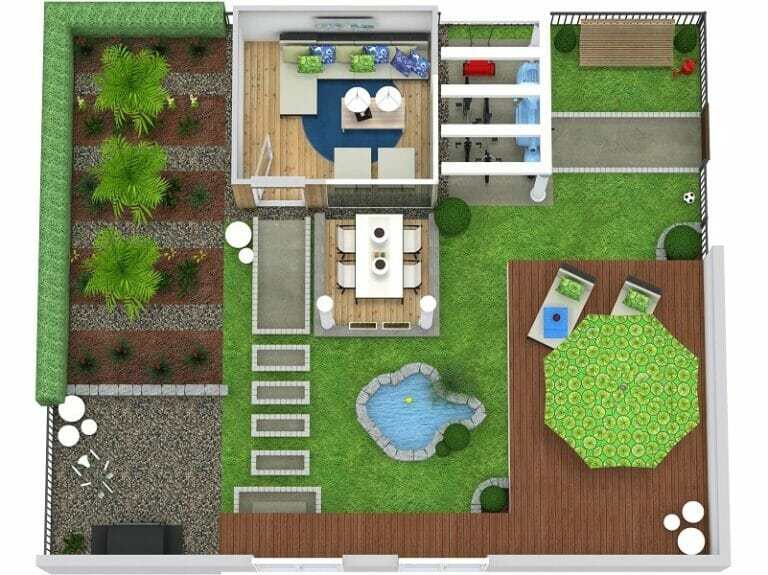
Step 7: Bring in the Finishing Touches
Lighting and seating can completely change the way a garden feels. A small bench under a tree, soft lights along a path, or a cluster of containers near the patio adds charm and makes the space feel lived in.
You can test different ideas in RoomSketcher to see how everything works together. This is especially helpful if your space is small and every choice counts.

Plan Your Garden Before You Plant
Seeing your garden on paper makes every decision easier. With RoomSketcher, you can sketch your backyard, test different layouts, and try out paths, planting beds, and seating areas before you commit.
- Draw your yard to scale so everything fits
- Create zones for planting, relaxing, and walking paths
- Try different layouts without starting over
- Get a clear plan you can use when planting or shopping
Related Articles

What to Include on a Site Plan: 10 Essential Features
Trouble figuring out what to include on your site plan? Don’t worry! We’ve created a list of ten essential things every site plan should include.

From Patios to Pools: The Best Outdoor Living Space Ideas
RoomSketcher home design software isn’t just for indoors. You can create outdoor designs too! Get inspired and learn how to create outdoor areas, decks, patios, pools, yards, and gardens now.
What to Include in a Landscape Plan
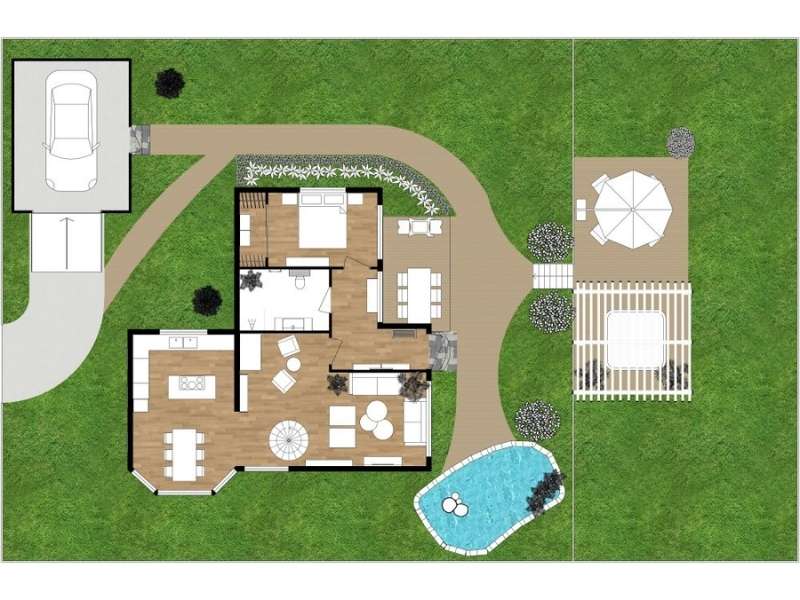
A landscape plan shows how an outdoor space will look and function. It maps out plants, lawns, paths, walls, lighting, and other features for a home, community park, or commercial property.