4 Easy Steps to Create a Zen Bathroom Style
Need a break from a busy day? A Zen-inspired bathroom can turn an everyday space into a calm, restorative retreat.

Quick summary:
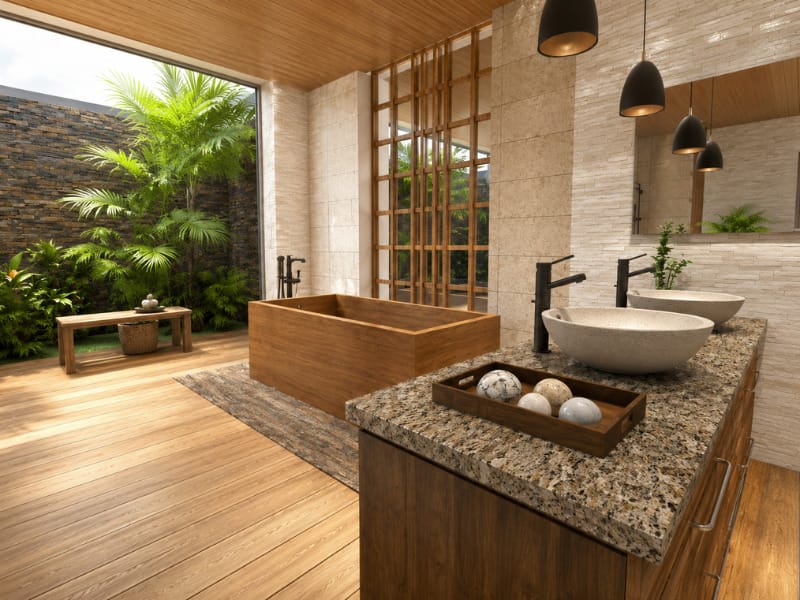
A Zen bathroom style uses natural materials, calming colors, and simple, uncluttered design to create a peaceful, spa-like retreat. You can pull off the look in four steps: add natural wood accents, choose soothing nature-inspired colors, install a centerpiece bathtub, and bring nature indoors. The simplest starting point is free — declutter and keep everything clean and straightforward.
Whether you want to begin your morning in a more relaxed state of mind or unwind at the end of the day, a few thoughtful design choices can make your bathroom feel more peaceful.
Natural materials, soothing colors, uncluttered surfaces, and simple forms all contribute to the look.
In this article:
What is a Zen Bathroom Style?
When used to describe interior design, Zen refers to bringing peace, relaxation, and harmony.
A bathroom is a natural choice for Zen style as it is a room in which it’s important to be comfortable and relaxed. That’s likely why many top destination spas use Zen-inspired style to pamper their clients.
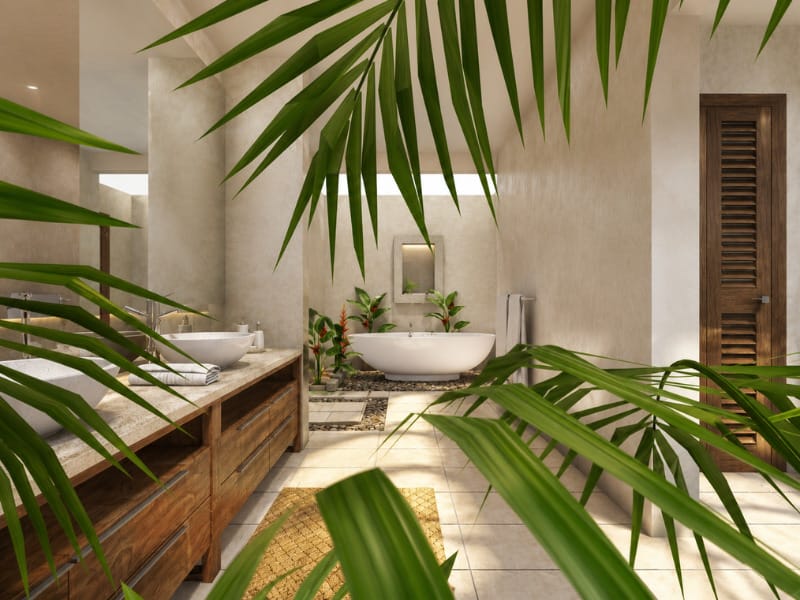
Here are four steps to help you create an authentic Zen-inspired experience in your home.
- Add wood accents
- Use calming Zen colors
- Install a centerpiece bathtub
- Embrace nature
Now, let’s take an in-depth look at these four steps.
#1 – Add Wood Accents
One of the iconic features of a Zen bathroom style is the use of nature-inspired elements. One excellent way to achieve this is by incorporating wood accents into your bathroom. Wood connects you with the outdoors and evokes feelings of calm while keeping your space neutral yet modern.
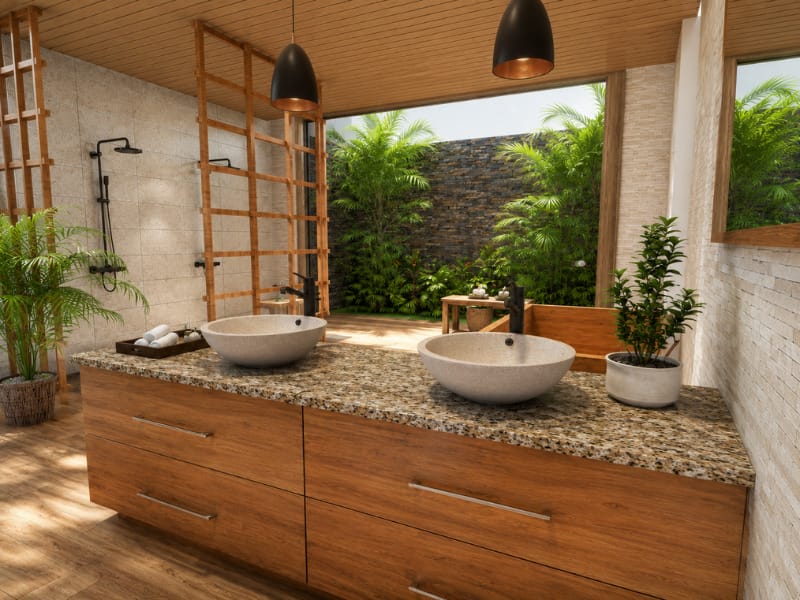
Here are a few excellent ways to add wood accents into your bathroom:
- Create a wood accent wall
- Consider bamboo flooring
- Add an Asian-style wooden bathtub
- Use wood artwork
- Add a teak bench or stool
- Choose a wood vanity
- Add wood shelves
As you can see, the options are many when it comes to using wooden accents in your bathroom.
Look for finished wood or water-resistant simulated wood items. Unfinished wood is a risky choice in a bathroom as it will soak up the moisture and potentially grow unsightly mold or mildew.
#2 Use Calming Zen Colors
When it comes to choosing a Zen color scheme, think about the colors that are the calmest or the most peaceful for you. Here are a few color palettes that come to mind when we think of the Zen bathroom style.
Muted and natural
The calming features of nature often inspire Zen designs. Imagine the sound of water bubbling over rocks in a small stream. Picture a walk on the beach or sitting in a peaceful spot in a meadow.
To bring those feelings into your bathroom, designers opt for muted sand, blue-gray, taupe, and green shades.
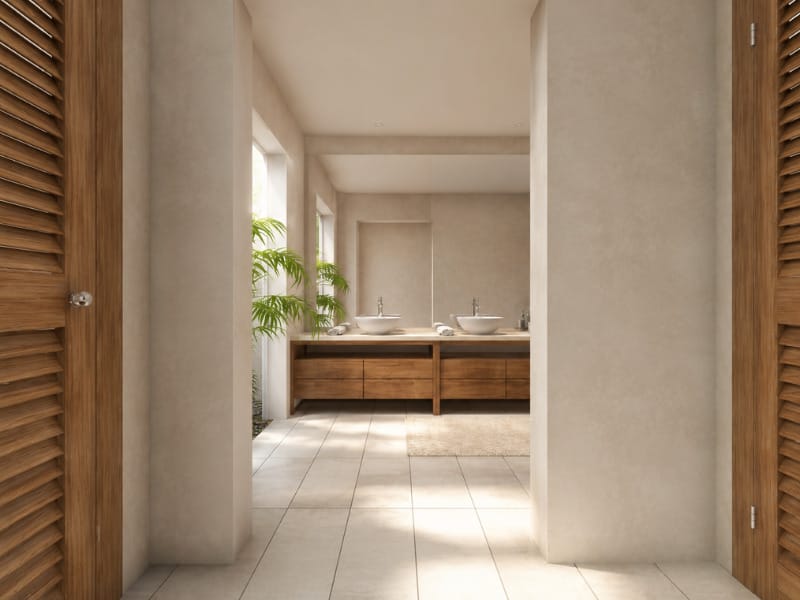
Neutral cream, beige, and brown
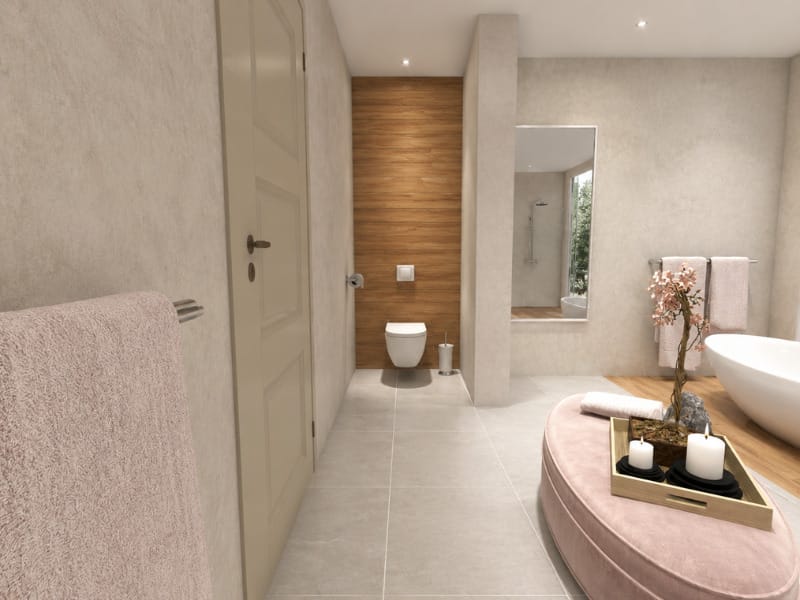
The neutral look is trendy right now. To turn your bathroom into a spa-like tranquil retreat, dress it in shades of brown, beige, and cream.
Apply cream or beige paint to the walls, and use similar shades for floor and shower tiles. Choose a wood or stone vanity. Then layer in textural accents in brown for fixtures and accessories to add dimension and interest.
Shades of grey
Grey is another top nature-inspired choice for a zen bathroom. Imagine the grey shades of beach rocks, wet beach sand, or a peaceful and quiet foggy morning.
For a more masculine Zen bathroom look, go for moody shades of grey. Perhaps large format grey tiles in a stacked format for the floor and walls. Then add a white or black vanity top, a white freestanding tub, wood shelves or accessories, and a green plant for a touch of color. Black or silver fixtures could work in this scheme.
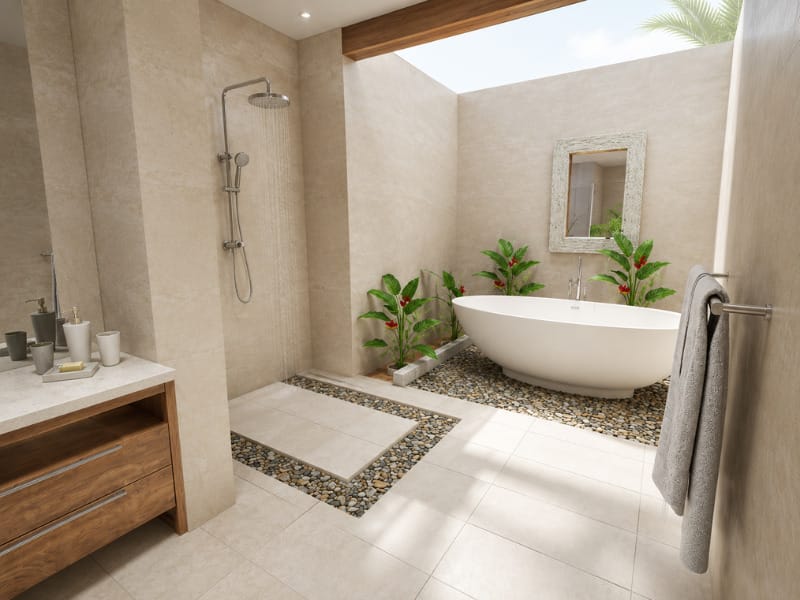
For a more feminine look, choose lighter shades of grey for the tile. You could add a marble vanity countertop, softer chrome fixtures, fluffy towels, and finish with an orchid or other flower.
#3 Install a Centerpiece Bathtub
A freestanding bathtub is a common element in a Zen bathroom and is often a centerpiece of the room. As such, it’s often large, with simple, minimalist curves, and is effectively an art piece for the room.
If possible, place the tub near a window so that you can contemplate nature while soaking – sure to give you a Zen sense of peace and calm. If you don’t have a suitable window, add a tall floor-standing plant next to the tub to achieve a similar nature-inspired effect.
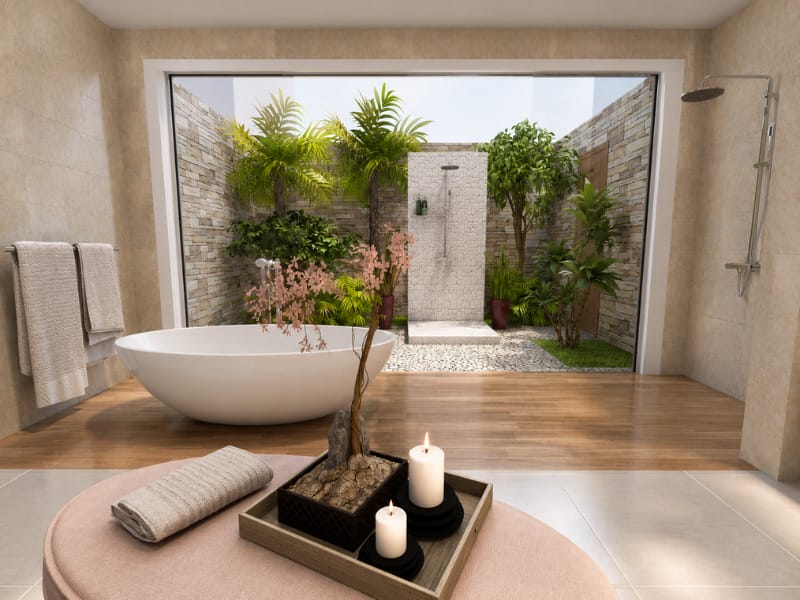
Here are a few elements you might want to consider adding around your bathtub:
- A wood bench on which to place soft, white towels
- A wood or bamboo bath caddy – for candles, a book, and perhaps a glass of wine
- A shelf or basket with your favorite bath products
Instead of a full-length bathtub, you can also install a traditional Japanese soaking tub. This type of tub is often made of wood, is typically shorter and deeper than a standard tub, has a built-in seat, and allows the bather to get completely under the water.
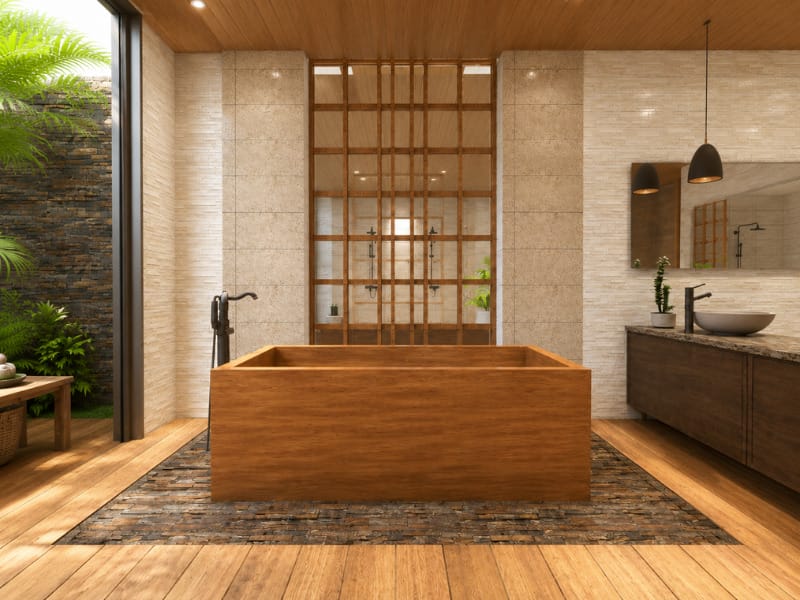
Since this type of tub is deep, it is sometimes installed partially submerged to make it easier to enter and exit the tub.
#4 Embrace Nature
The final step to successfully pull off a Zen bathroom style is to bring nature into the room. There are a lot of ways to achieve this.
Windows. Zen bathrooms often have large windows showcasing a view of nature, whether it be a patio planted with bamboo or a beautiful backyard. If such a view is possible based on your bathroom location, consider adding a large window.
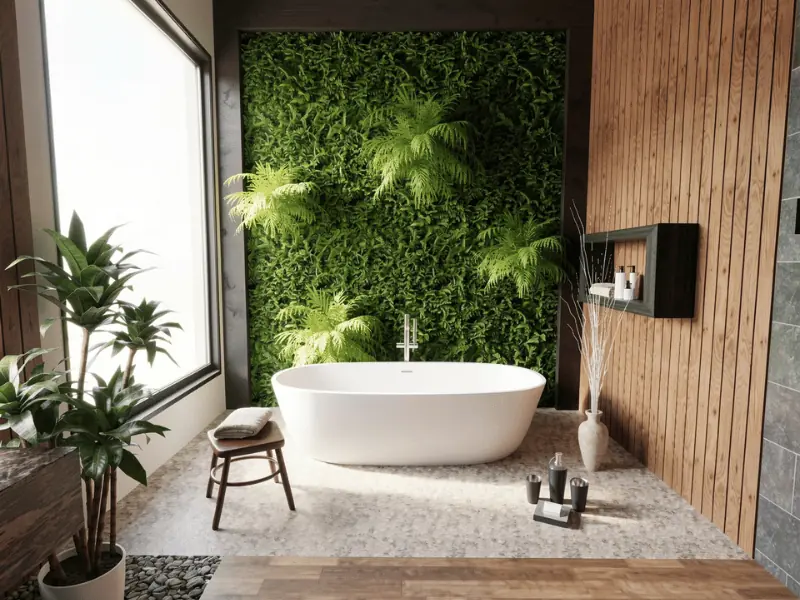
River rock, pebbles, and stone. Large format rough-hewn stone tiles add a natural feel installed on the bathroom floor or walls. Pebble floor tiles add a nice touch of nature to a shower floor or in a space around the bathtub.
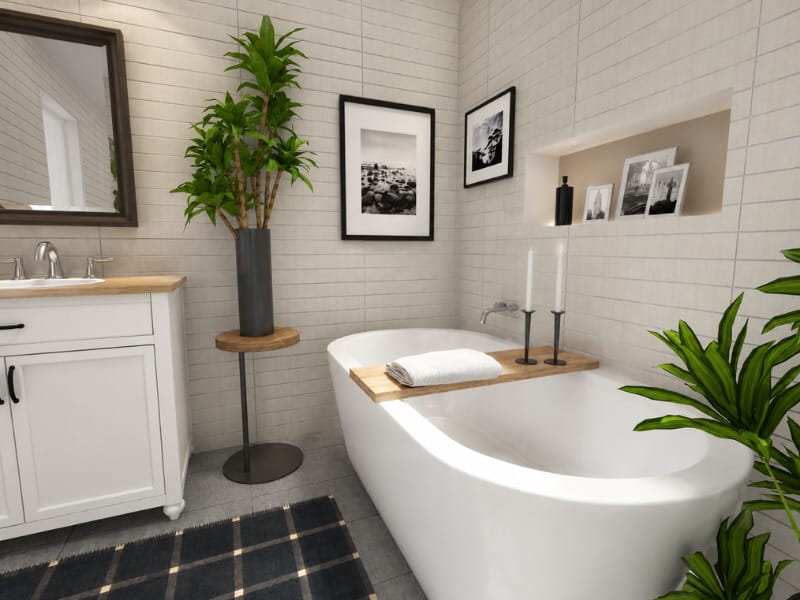
Plants and flowers. Bring nature in with potted plants. If you have space, a tall, floor-standing plant, such as bamboo or a palm, adds an Asian feel. With less space, you can add smaller plants or succulents on a shelf or counter. An orchid or other flower can add a subtle hint of color.
A great way to transform an ordinary bathroom into a Zen one is to opt for tiles with a matte finish. Matte tiles are ideal for bathrooms as they make a space appear larger, unlike small gloss tiles that can make a room feel smaller. Additionally, matte tiles offer a softer and natural feel, ideal for a Zen bathroom design.
Design Your Zen Bathroom
A zen bathroom can be simple and affordable. Start by clearing away clutter, keeping everyday items behind closed doors, and choosing a few calming materials, colors, and details from the ideas above.
For a larger renovation, it helps to plan the layout before making any changes. Use the RoomSketcher app to draw your bathroom floor plan, test different fixtures and finishes, and view the design in 3D.
Create your own zen bathroom design, or explore our Bathroom Floor Plan Examples for more inspiration.
Common Questions
Muted, nature-inspired tones work best: soft sand and blue-greens, neutral cream, beige and brown for a spa-like look, or shades of grey — moody and dark for a masculine feel, or lighter grey for a softer one.
Use finished wood or water-resistant simulated wood. Unfinished wood is risky in a bathroom because it soaks up moisture and can grow mold or mildew.
Start with the free step: declutter, removing anything you don’t use and hiding the rest behind cabinet doors. Then add a few inexpensive touches from the four steps, keeping everything clean and simple.
Add large windows for a view, use river rock, pebbles, or rough-hewn stone tiles for natural texture, and bring in potted plants and flowers — a tall plant if you have the space.
Recommended reads

Complete Guide to Popular Bathroom Styles
Check out our complete guide to popular bathroom styles. More than 15 styles to choose from with lots of inspiration and how-to advice. Learn more now.
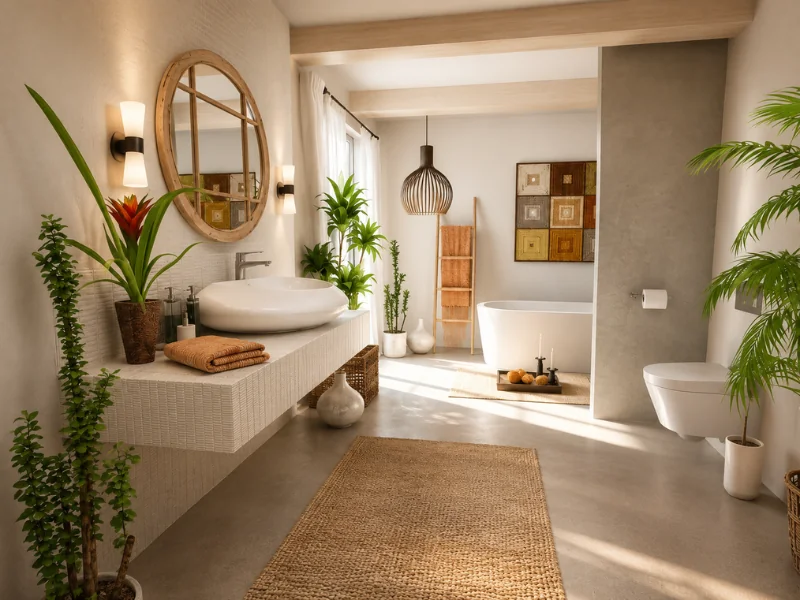
Boho Bathroom Ideas to Inspire Your Makeover
Inspired by nature and artistic maximalism, this design trend delivers a fresh, unconventional, and effortless look. We give you some boho-chic bathroom style ideas!

Stunning Scandinavian Bathroom Style Ideas You’ll Love
It’s no surprise that this style continues to grow in popularity and is now a top choice for bathrooms worldwide.