10 Things to Consider When Planning a Home Office
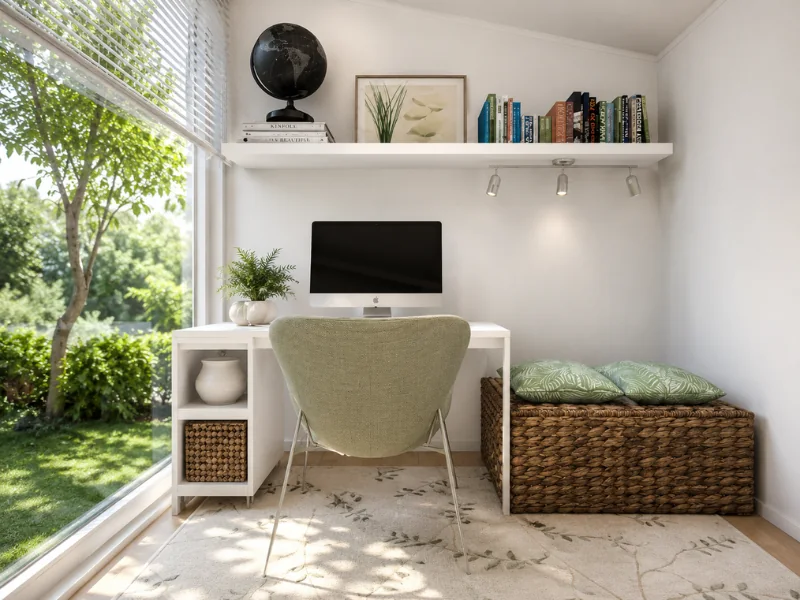
Home offices come in many different shapes, sizes, and styles. There are important things to consider when planning your home office whether your workspace is in a converted garage, a purpose-built annex, a small bedroom, or a corner of another room. Some people spend over 35 hours-a-week in this space, so it needs to be distraction-free and comfortable.

Quick summary:
A well-planned home office should be comfortable, practical, and easy to work in. Choosing the right room, allowing enough space to move, investing in a supportive desk and chair, and planning storage, lighting, temperature, and noise levels can all improve the way the space functions. Personal touches can then make the office feel more inviting and suited to how you work.
A home office should make it easier to focus, stay comfortable, and get through the workday without unnecessary distractions. Whether you are converting a spare bedroom, using part of another room, or creating a dedicated workspace, the right layout and setup can make a big difference.
From choosing the best location to planning furniture, storage, lighting, and noise levels, here are 10 things to consider when creating a home office that works for you.
In this post:
1. Selecting the Correct Room
If you are fortunate to have a number of rooms to choose from, make sure you select a room that will offer you enough space, light and privacy to allow you to work comfortably.
2. Enough Space to Move Around
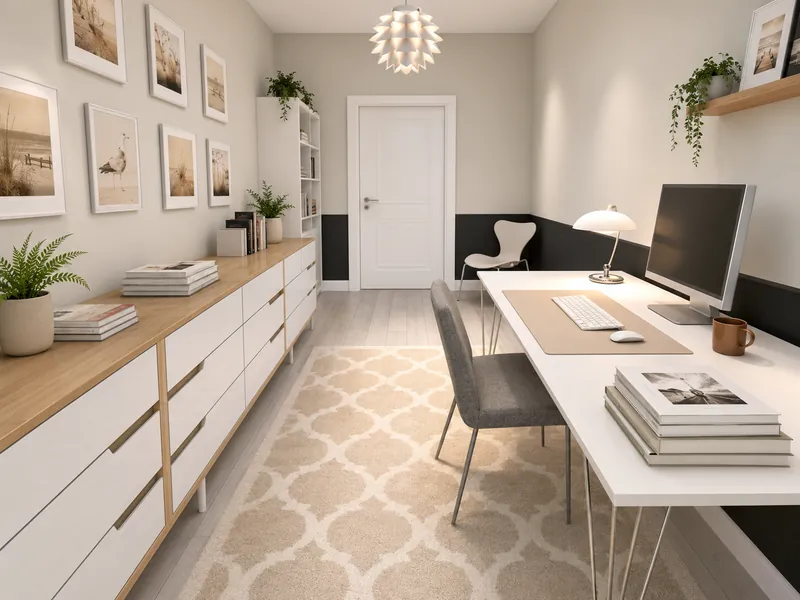
It is important to have enough space to be comfortable when working. If you work on your own, make sure your space is big enough for you to move about, stand up and sit back from your desk.
If you work with colleagues or employees, make sure the room is big enough for all of you. There is nothing worse than having to push past your colleague every day to get to the coffee machine.
3. A Decent Desk and Comfortable Seat
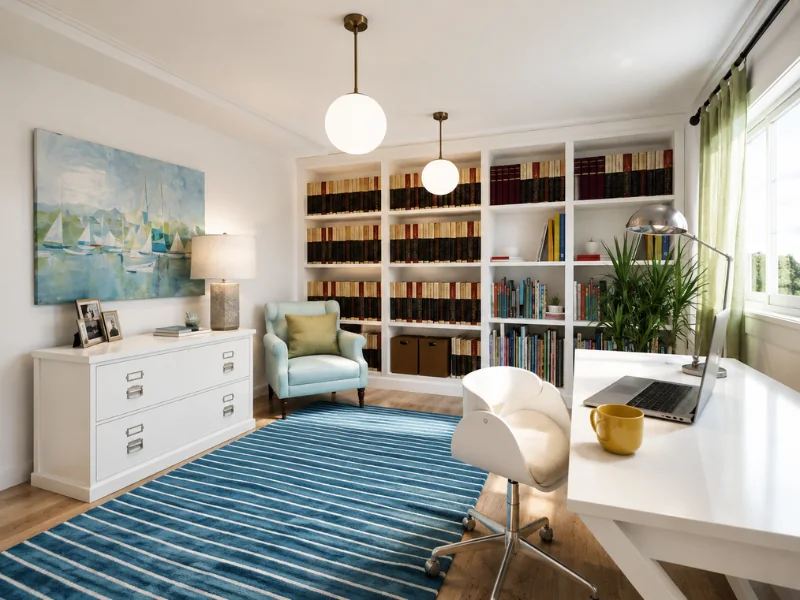
Buying a decent desk and chair for your home office will always be worth every penny if it reduces back pain problems in the future. Make sure your desk is big enough to fit both your computer and anything else necessary to do your work.
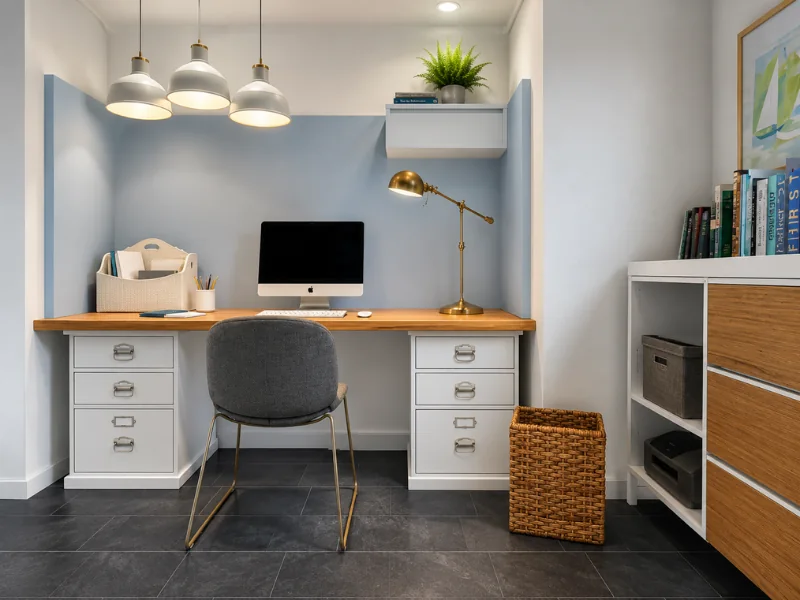
4. Storage Space and Shelving
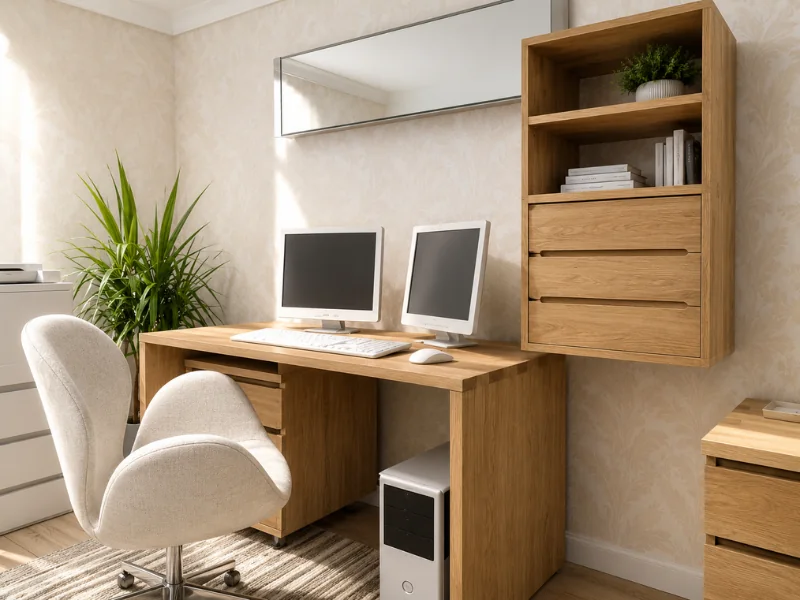
It is important to have enough shelves, filing cabinets, and cupboards for your files, books, papers, and stationery.
5. Somewhere to Hold Meetings
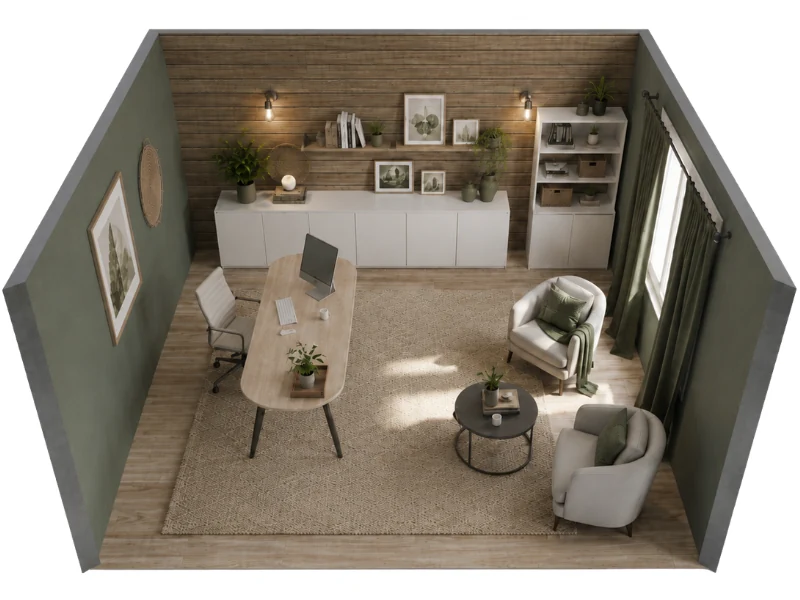
If you have clients or customers visit you during the day, comfortable seating to have sit-down meetings is essential.
Make sure you have a clean and tidy area to meet them and talk to them face to face. If space is limited, you can always hold meetings around the kitchen table or in the living room.
6. Lighting
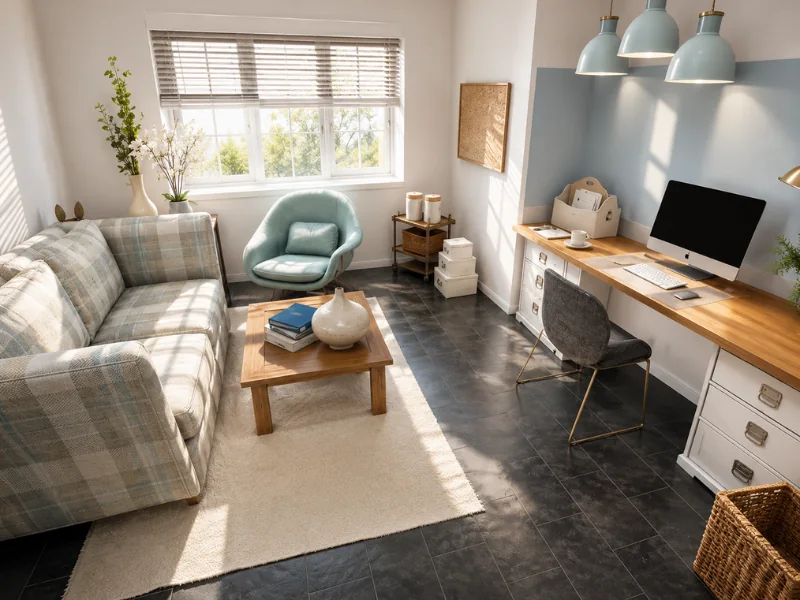
Natural light is essential and it can be maximized by using mirrors and painting the walls with light colors. Make sure your computer screen isn’t affected by direct sunlight and pick a good lighting arrangement for working in the evenings.
7. Temperature
Being too hot in the summer and too cold in the winter is an unwelcome distraction from your work. Make sure you have a reliable way of heating and cooling the room when the temperatures fluctuate in the summer and winter.
Ideally, you want to have a window that you can open to let some fresh air in – if not, make sure you can open the door to another room with an open window.
8. Minimize Noise and Distractions
Your room or space should be tucked away in a quiet part of the house, out of the way from children or pets that might distract you.
9. Cleanliness
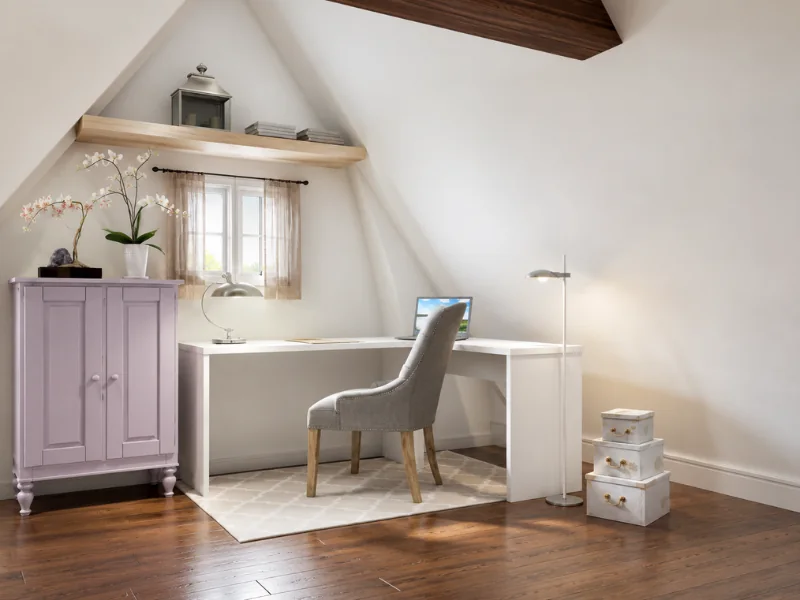
Always keep your home office clean and tidy. Spend the first 10/15 minutes of the day tidying your desk and vacuuming if necessary – it will always be worth it.
10. Personalize it
You are lucky enough to be in control of what your office space looks like, so make sure you add your own personal touches that will please you. Add one of your favorite paintings, colors or decorations that will brighten up your day.
Plan Your Home Office with RoomSketcher
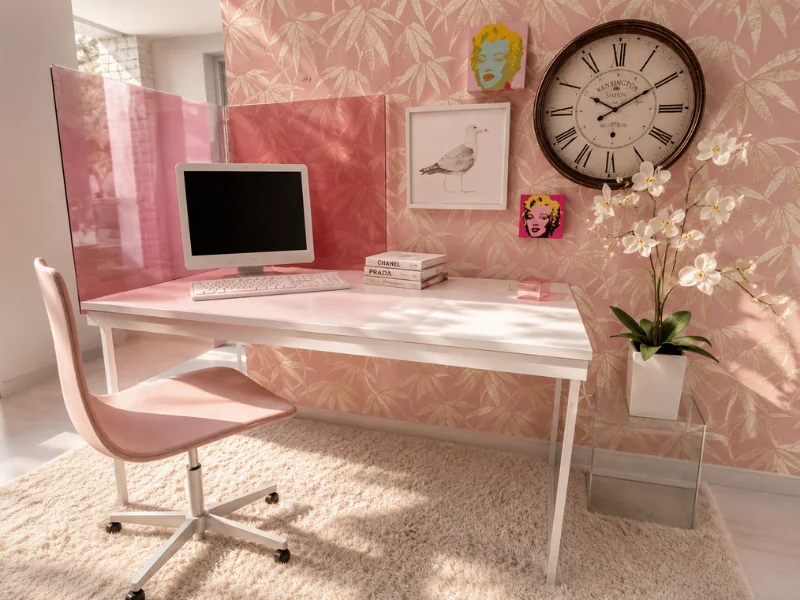
Before you move furniture or invest in a new desk, use RoomSketcher to test different home office layouts and see what fits.
Add the room’s measurements, arrange desks, chairs, storage, and meeting areas, and compare different setups in 2D and 3D. It’s an easy way to plan a workspace that feels comfortable, organized, and suited to the way you work.
Common Questions
Choose a quiet area with enough space, privacy, and natural light. A spare bedroom, converted garage, loft, or unused corner can all work, depending on your home and how often you use the office.
You need enough room for your desk, chair, storage, and any other equipment, with clear space to move around comfortably. If clients or colleagues visit, allow extra room for seating.
Place the desk where you have good light without glare on your screen. Make sure there is enough room to sit comfortably, move your chair, and reach the storage and equipment you use most often.
Make the most of natural light, but avoid placing your screen in direct sunlight. Add task lighting near the desk and enough general lighting to keep the room comfortable during darker hours.
Choose a quiet part of the home where possible, keep the workspace tidy, and separate it from busy household areas. Storage can also help reduce visual clutter and keep work materials organized.
Recommended Reads
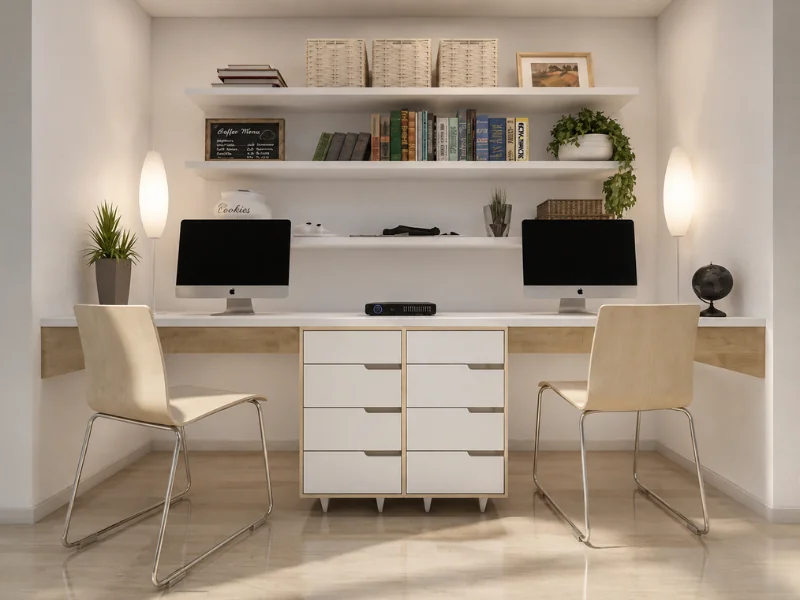
9 Essential Home Office Design Tips
Planning a home office? These 9 essential tips will help you create a beautiful and practical home office design.
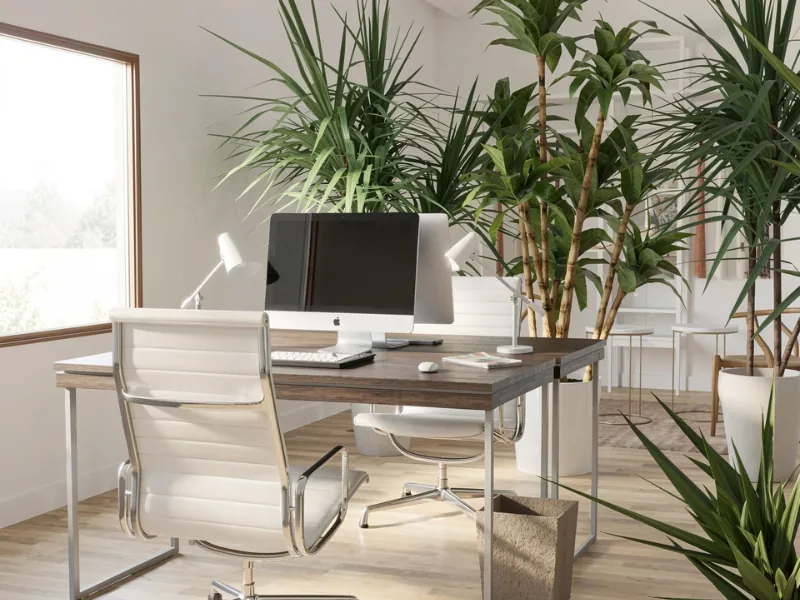
Design Your Office with RoomSketcher
Plan and visualize your office design online and in 3D! Create layouts, floor plans, 3D images, source furniture and more with RoomSketcher.
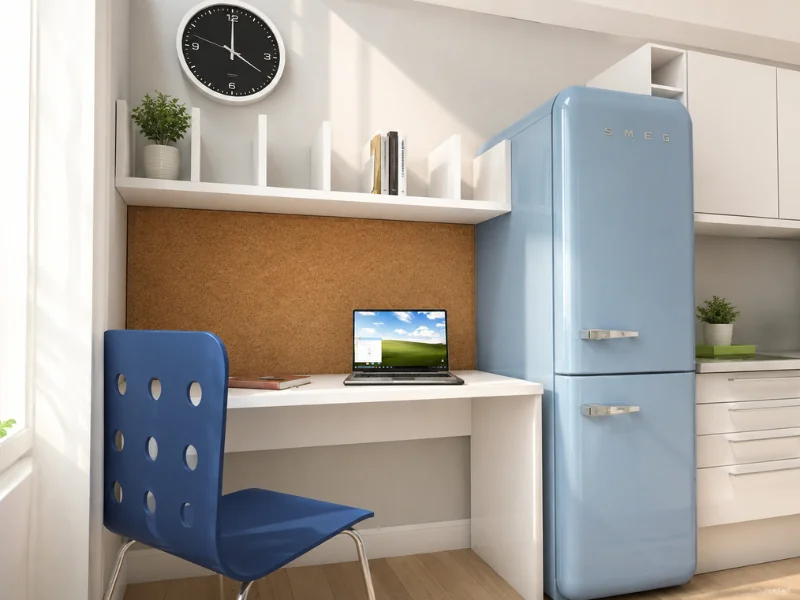
8 Inspiring Kitchen Desk Area Ideas
Looking for kitchen desk ideas? Learn how you can create a central command post in your kitchen with these simple kitchen desk design tips.