Electrical Plan Examples to Kick-Start Your Project
Electrical plans show where outlets, switches, lighting, and other electrical elements should be placed within a space. In this article, you’ll find a collection of electrical plan examples for different rooms and building types, along with practical tips to help you plan your own layout.


Planning an electrical layout becomes much easier when you can see how others have done it. Electrical plan examples show how outlets, switches, and lighting fixtures are typically arranged on a floor plan.
The examples below cover common spaces such as kitchens, bedrooms, bathrooms, living rooms, and commercial buildings. Use them as inspiration when planning your own project and to help ensure your electrical layout is clear, practical, and easy to install.
Electrical Plan with Dimensions
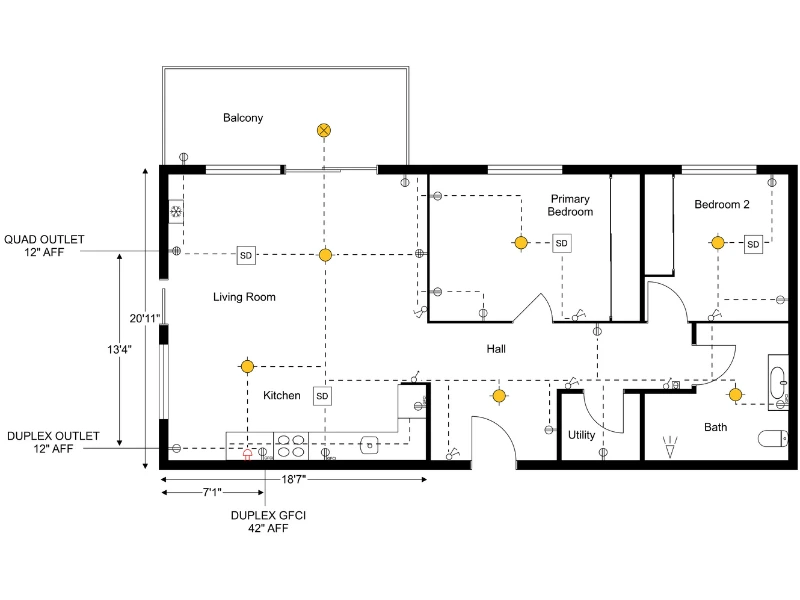
Adding dimensions to an electrical plan helps ensure that outlets, switches, and lighting fixtures are placed exactly where they are needed. Measurements make it easier to coordinate with contractors and confirm that installations follow the intended layout.
A dimensioned plan also improves communication between everyone involved in the project, reducing the risk of mistakes during installation.

Electrical Wiring Plan with Measurements
An electrical plan with measurements shows the distances between outlets, switches, and fixtures within a space. This makes it easier to maintain consistent spacing and place elements accurately across the layout.
Clear measurements also help installers understand the intended placement of each electrical component.
House Electrical Plan
A house electrical plan outlines the placement of outlets, switches, lighting fixtures, and major appliances throughout the home. Each room should have convenient access to power while maintaining safe spacing and clear organization.
It’s also important to consider safety elements such as GFCI outlets in wet areas and smoke detectors in key locations. Separating electrical loads across different circuits can help maintain a reliable system and support future needs.

Residential Electrical Drawing
A residential electrical drawing shows how electrical elements are arranged across the home. Instead of focusing on one room, it gives an overall view of how lighting, outlets, and other components are distributed throughout the layout.
This type of plan helps ensure the home has consistent access to power while keeping the layout organized and easy to interpret.

Electrical Layout for a Kitchen
Kitchens often require more electrical planning than other rooms because many appliances and work areas rely on power.
Outlets are typically placed along countertops for small appliances, while larger appliances such as refrigerators, ovens, and dishwashers may require dedicated connections. Good lighting is also important, especially above preparation areas where clear visibility is needed.

Electrical Layout for a Bedroom
Bedroom layouts focus on comfort and convenience. Outlets are often placed near beds and desks so devices can be used or charged easily.
Switch placement also matters. Many bedrooms include switches near the entrance as well as beside the bed so lighting can be controlled from different positions.

Electrical Drawing for a Bathroom
Bathrooms require careful planning because moisture affects how electrical elements can be placed.
Outlets are usually located near sinks for grooming devices, while lighting is often positioned around mirrors to provide even illumination. Safety features such as protected outlets are commonly included to reduce risk in wet areas.

Electrical Plan for a Living Room
When designing an electrical plan for a living room, careful consideration should be given to where outlets are placed to ensure the space works well in everyday use. Start by thinking about how the room will be used and which devices are likely to be present, such as lamps, televisions, speakers, or other entertainment equipment.
Position outlets along walls, near seating areas, and wherever electronics are likely to be used. This helps reduce the need for extension cords and keeps power sources within easy reach. In some layouts, floor outlets or concealed power points can also help maintain a clean and uncluttered appearance.

Electrical Layout for a Hotel Room
Hotel room layouts are designed to prioritize convenience and comfort for guests. Power access is usually placed near beds, desks, and seating areas so guests can easily charge phones, laptops, and other devices.
Lighting controls are often arranged so guests can adjust brightness without leaving the bed. Some designs also include energy-efficient lighting or automated controls to improve sustainability and manage energy use.

Electrical Plan for a Commercial Building
Electrical plans for commercial buildings must support a wider range of equipment and operational needs than residential layouts.
These plans typically include the placement of outlets, lighting systems, electrical panels, and emergency lighting. A clear layout helps ensure that the building operates safely and efficiently while meeting local codes and regulations.

Create Your Own Electrical Plans with RoomSketcher
With RoomSketcher’s electrical plan features, you can start with your floor plan and simply place electrical symbols exactly where you need them. Everything appears directly on your layout, so it’s easy to see how the electrical elements fit within the space.
You can move symbols, adjust placements, and refine the layout in seconds. The result is a clean, professional plan that’s easy to understand and share with electricians, contractors, or clients.
Recommended Reads
How to Draw an Electrical Plan with RoomSketcher
Learn how to draw an electrical plan step by step. This guide shows how to place lighting, outlets, and switches clearly on your floor plan so the layout is easy to understand and share.

How to Make an HVAC Floor Plan With RoomSketcher
Design your HVAC floor plan easily with RoomSketcher. Learn step-by-step instructions to create an efficient and accurate HVAC design.
Complete Guide to Electrical Symbols and Abbreviations
What are electrical symbols, and what do they mean? Where are they placed on a floor plan, and what are the regulations for placing them? Here's everything you need to know about electrical plans.